



Trail Running injuries: a comprehensive guide to preventing, recognising and recovering from injuries
Trail running is much more than a simple run: it is a form of exploration of both body and nature, a discipline that combines endurance, technique, and awareness.
Every route is different: a forest trail, an alpine ridge, or a rocky single track with roots all present unique characteristics and must be tackled with different approaches.
This variety of terrain and conditions makes trail running fascinating, but also more complex and riskier than road running.
Unpredictable terrain, elevation changes, weather conditions, and cumulative fatigue expose trail runners to a higher risk of muscular and joint injuries.
These are not just “incidental accidents,” but conditions that can compromise training continuity and performance quality.
For this reason, understanding the main injuries in trail running, their causes, and prevention strategies is a fundamental part of every athlete’s preparation.
To fully understand how to keep the body healthy and performing, we will analyze in detail:
-
the mechanisms that lead to injury
-
the most exposed body areas
-
prevention protocols
-
the importance of nutrition
The goal is to provide a comprehensive tool for every trail runner who wants to run for a long time, in good health, and with awareness.
Injuries are not only negative events, but opportunities to better understand one’s body and improve the balance between training and recovery.
Learning how to prevent them also means becoming more mature athletes, capable of listening to signals and reacting with sporting intelligence.
Recommended insights:
Understanding injury mechanisms is the first step toward turning vulnerability into awareness and prevention into an integral part of daily training.
In the following sections, we will explore what “trail running injuries” really mean and how to recognize their different forms.
_ _ _ _ _ _
_ _ _ _ _ __
What is meant by injuries in trail running
Trail running requires a fine balance between strength, control, mobility, and recovery.
Unstable terrain and long descents place particular stress on ankles, knees, hips, and back, while high elevation gain and race duration increase physiological stress.
Injuries affecting trail runners can have very different origins:
-
biomechanical
-
traumatic
-
muscular
-
tendinous
-
related to accumulated fatigue
In general, a sports injury is a musculoskeletal lesion that causes pain, functional limitation, or reduced performance.

Types of injuries in trail running
In trail running, it is useful to distinguish two main categories of injuries:
-
Acute injuries: sudden lesions often caused by direct trauma or a single event, such as an ankle sprain, a fall, or a muscle strain. They present with immediate pain and swelling and require temporary rest.
Further reading: Physiopedia – Ankle Sprain. -
Overuse injuries: lesions that develop over time due to repeated micro-trauma and represent the most common form of injury in trail running. They often begin subtly, with mild discomfort that gradually worsens. Examples include tendinitis, plantar fasciitis, iliotibial band syndrome, or patellofemoral pain.
Further reading: British Journal of Sports Medicine – Overuse Injuries.
A key element in prevention is the ability to recognize early warning signs from the body:
-
stiffness
-
asymmetric pain
-
localized fatigue
-
changes in running technique
Early intervention helps avoid chronic conditions that may require weeks or months of rest.
Compared to road running, the overall injury frequency in trail running is similar, but the type of injuries differs:
-
traumatic injuries are more frequent
-
overuse injuries are distributed differently due to terrain variability
Interestingly, this same variability—when properly managed—can become a protective factor, as running on different surfaces stimulates more complete neuromuscular adaptation.
Useful reference: PubMed – Injury risk factors in runners
Understanding the nature of injuries and their context allows for personalized prevention strategies.
In the next sections, we will analyze the most common causes of trail running injuries, with practical examples and references to the latest research.
Main causes of injuries in trail running
Trail running takes place in a natural and variable environment, where every condition—from terrain to temperature—can influence injury risk.
Recent scientific studies show that most injuries are multifactorial: no single cause acts alone, but risk increases when multiple factors combine and exceed the body’s capacity to adapt.
Terrain and environmental conditions
The first major risk factor is terrain.
Running on uneven, muddy, rocky, or snowy surfaces requires constant stabilization work.
Ankles, calves, and foot muscles are stressed unpredictably, with hundreds of micro-adjustments needed to maintain balance.
If stabilizing muscles are not adequately trained, unstable foot placement can easily lead to:
-
sprains
-
muscle contractures
-
stress-related inflammation
However, terrain variability is not only a risk, but also a resource.
Experienced runners use mixed-environment training to improve proprioception and reduce asymmetries.
Alternating easy and technical routes helps develop reaction capacity and neuromuscular control, improving overall stability.
Useful references:
Training in environments similar to race conditions, using appropriate shoes and gradual elevation progression, is one of the most effective long-term prevention strategies.
Programming errors and excessive load
One of the most common mistakes among trail runners—both beginners and experienced athletes—is increasing mileage or intensity too quickly.
The body needs time to adapt, especially tendons and joints.
Increasing elevation gain and distance without controlled progression can lead to:
-
chronic overload
-
persistent pain
-
in severe cases, tendon injuries
The principle of gradual progression remains the foundation of any training plan.
Lack of recovery weeks or excessive frequency of intense sessions are also underestimated risk factors.
Prevention does not mean reducing load, but distributing it intelligently.
Alternating running, strength training, mobility work, and recovery promotes balanced tissue adaptation.
Including cross-training (cycling, swimming, hiking) maintains aerobic fitness without constantly stressing the same structures.
Well-calibrated programming, guided by a qualified coach, is one of the most important investments for sustainable trail running.

Equipment and footwear
Equipment is an extension of the trail runner’s body.
Trail running shoes, in particular, are the direct interface with the ground and can make the difference between a safe run and an injury.
Shoe choice must consider:
-
terrain type
-
individual foot strike
-
elevation gain.
Shoes that are too soft or lack lateral support increase instability risk, while overly rigid models can cause tendinitis or plantar pain.
Drop (heel-to-toe difference) must also be chosen carefully: very low values (0–4 mm) can overload the Achilles tendon if the runner is not adapted.
Backpacks and poles are often overlooked.
An overly heavy or poorly adjusted backpack alters the center of gravity, leading to postural compensations.
Incorrect pole use or unsuitable models can cause shoulder and back tension.
Proper equipment not only improves performance but also maintains efficient biomechanics and reduces abnormal loads.
Individual factors and predisposition
Every athlete has a unique biomechanical profile.
Certain intrinsic factors can increase vulnerability to specific injuries, such as:
-
glute weakness
-
joint stiffness
-
muscular imbalances
-
technical errors
A runner with poor hip control, for example, is more prone to patellofemoral pain or iliotibial band inflammation.
Rigid or unstable ankles increase the risk of sprains.
Mental fatigue is also key: loss of focus on technical descents can be enough to cause missteps.
Including strength tests, proprioceptive exercises, and mobility sessions reduces risk and improves dynamic posture.
References:
Regular functional analysis and body awareness are powerful tools in preventing complex injuries.

The most common injuries in trail running
Each sport has its typical injuries, and trail running is no exception.
Variable environments, long hours of effort, and eccentric loads during descents make certain injuries particularly frequent.
The most affected areas are:
-
ankles
-
knees
-
feet
-
calves
-
lower back
Let’s analyze the most common injuries by affected area.
Ankle sprain
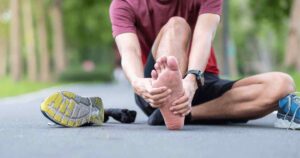
This is the most frequent injury, especially on technical terrain.
The classic mechanism is inversion twisting, causing stretching or tearing of the lateral ankle ligaments.
Pain is immediate, followed by swelling and reduced mobility.
Prevention:
-
proprioceptive exercises and peroneal strengthening
-
shoes with good lateral support
-
caution on unfamiliar terrain and long descents.
Training ankle stability drastically reduces recurrence risk and improves confidence on technical trails.
Iliotibial band syndrome (ITBS)
This condition causes lateral knee pain, especially during downhill running or moderate paces.
It results from friction between the iliotibial band and the lateral femoral condyle, often worsened by glute–quadriceps imbalance.
Prevention:
-
strengthening glutes and core
-
improving downhill technique
-
regular stretching of the fascia lata
Working on movement symmetry and hip stability is one of the most effective strategies to prevent recurrence.
Patellar tendinitis and patellofemoral pain
These mainly affect athletes who tackle significant elevation gain or intense uphill work.
Patellar compression against the femur, combined with quadriceps or glute medius weakness, causes anterior knee pain—often called runner’s knee.
Prevention:
-
targeted strength work (controlled squats, step-ups, lunges)
-
stretching hip flexors and quadriceps
-
attention to uphill running technique.
Consistent strength programs and proper load management reduce chronicity risk.
Plantar fasciitis and Achilles tendinitis
Plantar fasciitis causes pain under the foot near the heel, especially in the morning.
It is due to repeated micro-trauma, often worsened by worn shoes or calf stiffness.
Achilles tendinitis results from excessive load or inappropriate drop.
Prevention:
-
daily calf and plantar fascia stretching
-
appropriate shoe drop
-
orthotics only if recommended by a specialist.
Foot care is the foundation of injury prevention.
Lower back and muscular pain
Back pain often results from heavy backpacks, poor core control or poor uphill posture.
Prolonged descents increase eccentric load on paraspinal muscles and hip flexors.
Prevention:
-
core stability and lumbar mobility exercises
-
careful backpack balance
-
post-run stretching after long sessions.
A strong, stable back not only prevents injury but also improves uphill efficiency and downhill fluidity.

How to prevent injuries in trail running
Prevention is the most effective form of “invisible training.”
Every trail runner—regardless of level—should integrate a prevention plan based on three pillars:
-
adequate recovery
-
body awareness.
According to the British Journal of Sports Medicine, these elements can reduce injury risk by up to 70%.
A global prevention approach is not just about avoiding mistakes, but about building a body capable of sustaining prolonged effort and adapting to terrain stress.
Functional strength, technique, mobility, and stress management are key components of long-term resilience.
Integrated training and functional strength
A common mistake is believing that running more is enough.
Muscles and tendons must be prepared to withstand eccentric forces during descents, uneven impacts, and neuromuscular fatigue.
Functional strength training (glutes, core, posterior chain) stabilizes the body and reduces overload injuries.
Recommended exercises:
-
controlled squats and lateral lunges
-
dynamic planks and single-leg stability drills
-
light plyometrics on stable surfaces (for experienced athletes or under supervision).
According to the American College of Sports Medicine, two weekly strength sessions improve load tolerance and reduce tendon injuries by up to 40%.
Strength training does not slow runners down—it enhances performance.
Warm-up and cool-down
Every session should start with a proper warm-up and end with a cool-down.
Warm-ups increase muscle temperature, improve joint lubrication, and prepare the nervous system for complex coordination.
Cool-downs promote venous return, reduce lactate accumulation, and speed recovery.
General warm-up routine:
-
5–10 minutes of easy running
-
joint mobility (hips, ankles, shoulders)
-
3–4 progressive strides
After training:
-
static stretching for quads, calves, and hip flexors
-
diaphragmatic breathing and hydration.
This applies to easy or long aerobic sessions, but not to intense workouts or demanding long runs, where immediate stretching is discouraged.
Reference: Harvard Health – Stretching and Injury Prevention
Even 5–15 minutes of recovery work can prevent weeks of forced rest.
Recovery is an essential part of training and should never be neglected.

Gradual progression and load management
The 10% rule remains a golden guideline: do not increase volume or elevation gain by more than 10% per week.
This principle must be adapted to:
-
athlete type and age
-
training level (beginner, recreational, experienced)
Tendons, ligaments, and bones adapt more slowly than muscles.
Sudden terrain changes or steep rocky descents without transition increase injury risk.
Including planned recovery weeks every 3–4 weeks allows physiological rebalancing.
Load-monitoring tools (Garmin Connect, TrainingPeaks, etc.) can help, but their data should not be considered fully reliable, as they are based on averages.
Gradual progression is not a sign of slowness, but of sporting intelligence, ensuring a much longer athletic lifespan.
Equipment choice
Technical gear is the first line of injury prevention.
Trail running shoes should be chosen based on terrain, biomechanics, and distance.
Aggressive grip shoes are ideal for mud or rock but may feel stiff on compact trails.
Sole wear should be checked regularly.
In the past, shoes lasted 600–800 km; with modern materials, average lifespan is closer to 300–400 km, depending on brand and use.
A moderate drop (6–8 mm) is usually a good compromise for most mountain runners.
Zero-drop shoes remain controversial, especially for non-experienced athletes.
Front knee pain under the patella may indicate that cushioning is worn out.
Now let’s move on to another key pillar: nutrition and supplementation.

Nutrition and supplementation in injury prevention
After training, nutrition, hydration, and supplementation play a crucial role in reducing injury risk.
Anti-inflammatory nutrition
Proper nutrition is a powerful ally in injury prevention and recovery.
It directly affects tissue health, systemic inflammation, and muscle regeneration.
Key anti-inflammatory foods include:
-
colorful fruits and vegetables (vitamins C, E, polyphenols)
-
whole grains and legumes
-
oily fish and seeds (omega-3)
-
spices such as turmeric, ginger, and cinnamon.
Reference: Harvard Health – Anti-inflammatory Diet
Sports nutrition is not just fuel—it is part of training.
Hydration and electrolytes
Fluid and electrolyte loss can be high in trail running, especially in long races with elevation gain.
Dehydration affects muscle contraction, concentration, and increases cramp risk.
Practical and preventive tips to avoid performance drops or electrolyte imbalances:
-
drink regularly, even without thirst
-
balance sodium, potassium, and magnesium
-
use isotonic or natural drinks (outside races).
Consistent hydration supports muscle function and delays fatigue.
Supplements and natural support
Supplements do not replace a balanced diet but can provide targeted support during intense training or recovery.
Useful options include:
-
magnesium and potassium
-
bromelain and turmeric
-
glutathione and NAC
-
vitamin D and calcium
-
hydrolyzed collagen
-
omega-3
-
glucosamine
-
rhodiola
Sports literature reports numerous studies on these substances, although some are less reliable than others.
To promote awareness of traditional and innovative supplements, we have prepared two very interesting articles that you can read in more detail:
Proper supplementation reduces oxidative stress and accelerates tissue regeneration, i.e. muscle and overall physical recovery.

Recovery and Rehabilitation After an Injury
This section addresses the topic by breaking it down into management phases, ranging from the most acute to the more advanced stages of injury recovery.
Phase 1: Rest and Inflammation Management
After an injury, the primary goal is to control pain and inflammation.
During the first 48 hours, the R.I.C.E. protocol (Rest, Ice, Compression, Elevation) is applied.
Here is how the R.I.C.E. protocol works:
-
R – Rest: stop physical activity and movement of the affected area to prevent further damage and allow healing.
-
I – Ice: apply ice to the injured area, usually for about 15–20 minutes every two hours, to reduce pain, inflammation, and swelling.
-
C – Compression: use an elastic bandage or wrap to gently compress the area, providing support and limiting swelling.
-
E – Elevation: keep the injured limb or area elevated above heart level (for example, using a pillow) to promote venous return and reduce edema.
The RICE protocol is an effective first-aid method, but in cases of doubt, persistent pain, or severe trauma, it is always advisable to consult a healthcare professional.
Throughout this phase, it is important to avoid unnecessary loads and to consult your doctor regularly for an accurate diagnosis and assessment of recovery progress.
Sources: NHS – RICE Method
Remember, active rest—with light exercises and mobility work—is more effective than complete rest, as it helps prevent rapid loss of muscle tone.
Phase 2: Gradual Reactivation
In this phase, controlled movements, walking, and low-impact activities such as cycling or swimming are gradually reintroduced.
The goal of this protocol is to reactivate circulation and stimulate tissue regeneration.
Isometric and balance exercises help rebuild stability and confidence in movement.
Patience is crucial at this stage: rushing the return to activity can compromise healing and increase the risk of future relapses.
Phase 3: Strengthening and Return to Running
A progressive return to running requires a personalized program, ideally shared between a physiotherapist and a coach, such as those offered by TRM coaches.
The comeback typically involves alternating walking with short running intervals, carefully monitoring sensations on a daily basis.
At TRM, we prefer these sessions to be performed on soft surfaces rather than asphalt, such as dirt paths or grass.
Strengthening the specific muscles involved significantly reduces the risk of re-injury.
Alongside these sessions, it is important to include specific complementary work using tools or practices such as:
-
resistance bands
-
single-leg exercises
-
core stability exercises
As mentioned, the success of this phase depends on close collaboration between the physiotherapist, coach and athlete.
A well-managed rehabilitation process transforms an injury into an opportunity for both technical and mental improvement.

Mental Management and Return to Running
The psychological aspect of injury management is often underestimated, if not completely overlooked.
Being forced to stop for a long period can lead to frustration, anxiety, or fear of re-injury.
Mental support, on the other hand, helps athletes maintain motivation and transform downtime into a period of growth.
To best manage this phase, TRM offers trail runners a fully personalized program led by a sports psychologist.
Some of the key aspects addressed during the work with the therapist include:
-
setting realistic recovery micro-goals
-
maintaining a daily exercise routine
-
practicing breathing techniques and visualization
-
focusing on what can be controlled, rather than on what is missing
Book your personalized TRM Mental Strength consultation now.
Mental resilience is what distinguishes the experienced athlete from the impulsive one.
Learning to accept the body’s timelines means becoming stronger—not only physically, but mentally as well.
Conclusion: awareness and prevention to combat injuries
Trail running is an exciting yet demanding experience that requires a holistic approach to well-being and performance.
A detailed analysis of the most common injuries—from ankle sprains to overuse syndromes such as iliotibial band syndrome and other conditions—reveals one fundamental principle:
prevention is the true cornerstone of athletic continuity.
Injuries, whether acute (caused by trauma) or related to overuse (from excessive and repeated loads), almost always result from the combination of multiple factors: terrain variability, errors in load management (too rapid progression), inadequate equipment, and—above all—a lack of awareness of one’s biomechanical imbalances.
To run long, healthy, and consciously, every trail runner must invest in:
-
functional strength and technique: integrating running training with targeted strength sessions (core, glutes) and proprioception, which are essential for stabilizing the body on unstable terrain
-
intelligent load management: respecting the principle of gradual progression (ideally no more than a 10% weekly increase) and including planned recovery weeks
-
recovery and nutrition: never neglecting warm-up and cool-down phases, adopting an anti-inflammatory diet, and ensuring proper hydration to accelerate tissue regeneration
Injury should not be seen as a defeat, but as an opportunity to understand and strengthen one’s weak points.
The rehabilitation phase—from the R.I.C.E. protocol to the gradual return to running—requires patience, discipline, and close collaboration between the athlete, coach, and physiotherapist.
Ultimately, the key to sustainable and long-lasting trail running is not only physical preparation, but athletic maturity: the ability to listen to your body, respond to early warning signs, and turn vulnerability into an integrated training strategy.
Developing this awareness is the decisive step toward mastering the trails while staying healthy and high-performing. 🏃♀️⛰️💪
_ _ _ _ _ _ _
Would you like to discuss your case with a professional who can guide you in prevention, management or recovery after an injury?
Book now for one of the personalised consultations offered by Trail Running Movement coaches and experts:
_ _ _ _ _ _
FAQ – Frequently Asked Questions
1. What are the most common injuries in trail running?
In trail running, the most common injuries include ankle sprains, tendinopathies (such as Achilles tendon inflammation), iliotibial band syndrome, plantar fasciitis, and shin splints (tibial pain).
These issues often result from overuse and the repeated stress placed on muscles while running on uneven terrain.
2. Why does trail running carry a higher risk of injury compared to road running?
The variety of terrains, sudden changes in elevation, roots, rocks, and unstable surfaces require continuous neuromotor control.
This means the body is constantly under stimulation, increasing the risk of uncontrolled movements, slips, or unusual impacts.
3. How does fatigue affect the likelihood of getting injured during a trail run?
As fatigue accumulates, running technique deteriorates, joint stability decreases, and muscles become less effective at absorbing impact.
This makes runners more susceptible to overuse injuries or accidental falls.
4. How can I recognize the warning signs of an upcoming injury?
Persistent pain that increases during or after running, stiffness lasting more than 24 hours, limping, or a feeling of weakness in a joint are all warning signs that should not be ignored, as they may indicate early-stage inflammation or micro-trauma.
5. Are there effective ways to prevent injuries in trail running?
Yes. Targeted preparation includes dynamic warm-ups before training, strength exercises for the glutes, core, ankles, and feet, balance and proprioception work, and a gradual increase in training volume and intensity.
6. How important is the choice of shoes and equipment in injury prevention?
Very important.
Shoes with good grip, adequate support, and terrain-specific design help stabilize the foot and reduce the risk of slipping or twisting injuries.
Technical socks and trekking poles can also improve safety on demanding terrain.
7. What should I do if I get injured during a run?
At the first sign of significant pain, it is best to stop and assess the situation. Rest, ice, compression, and elevation (the RICE protocol) can help in the initial phase.
If the pain does not improve within a few days or worsens, consulting a healthcare professional is strongly recommended.
8. After an injury, how can I safely return to running?
The return should be gradual: first focusing on functional recovery, then introducing strengthening exercises, and finally resuming running with easy sessions, progressively increasing volume and intensity.
It is important not to rush the process to avoid relapses.
_ _ _ _ _ _
#TrailRunning #TrailRunningInjuries #TrailRunningPrevention #TRMCoach #TrailRunningMovement #TrailRunningItaly #TrailRunningTips #TrailRunningCommunity #TrailRunningRecovery #TrailPerformance #TrailNutrition #TrailRunningStrong #RunningScience #TrailRunnerLife #UltraTrail #TrailRunningTraining #TrailRunningHealth #TrailRunningCamp #TrailRunningMindset #TRMTraining #TrailRunningBody #TrailRunningRace #TrailRunningLifestyle #TrailRunningMan #TrailRunningWoman #EnduranceRunning #RunningInjuryPrevention #TrailRunningWellness #TrailRunningEnergy


CorsaInMontagna, RunningInjuryPrevention, trail runner life, Trail Running Injuries, Trail Running Prevention, TrailPerformance, trailrunning, trailrunningcamp, TrailRunningEnergy, TrailRunningHealth, TrailRunningItalia, trailrunningmovement, TrailRunningRecovery, TrailRunningTips, TrailRunningWellness, TRMCoach, ultratrail