


Training without running: how to use cardio machines in trail running
In trail running, training consistency is one of the most important elements for improving endurance, strength, and the ability to handle prolonged efforts on variable terrain.
However, it’s not always possible to run, and certain situations can interrupt your usual routine. In these cases, knowing how to train without running becomes a key skill for every trail runner.
Cardio machines represent an effective solution to maintain fitness even when you’re away from the trails. When used correctly, they allow you to continue to:
- stimulate the cardiovascular system
- work on endurance
- develop qualities that are useful for trail running.
In this article, we’ll look at when to use them, which ones to choose, and how to integrate them strategically into your training.
Enjoy the read
_ _ _ _ _ _
_ _ _ _ _ _
When it makes sense to train without running
Training without running should not be seen as a fallback, but as a conscious choice in certain situations. Understanding when to use these alternatives is the first step to making the most of them.
There are several contexts in which cardio machines become particularly useful:
- in case of injury or joint discomfort, to reduce impact while keeping the cardiovascular system active
- during recovery periods, when it’s necessary to reduce mechanical load without stopping training
- in unfavorable weather conditions, which make outdoor running difficult or risky
- when you have limited time and want a more controlled workout.
In these situations, the goal is not to completely replace running, but to preserve fitness and support a more effective return to specific training.
Why cardio machines are useful in trail running
In trail running, developing aerobic endurance is essential. Cardio machines allow you to work on this aspect in a continuous and controlled way, without the typical variables of the outdoor environment.
The main advantages include:
- the ability to maintain a constant intensity, ideal for aerobic training
- reduced stress on joints and tendons
- greater control over training parameters such as heart rate and duration
- ease of use at any time of the day.
These factors make cardio machines extremely useful not only when needed, but also as a complement to a trail runner’s training.
The best cardio machines for trail runners
Not all cardio machines provide the same benefits. For a trail runner, it’s important to choose those that develop qualities transferable to mountain running.
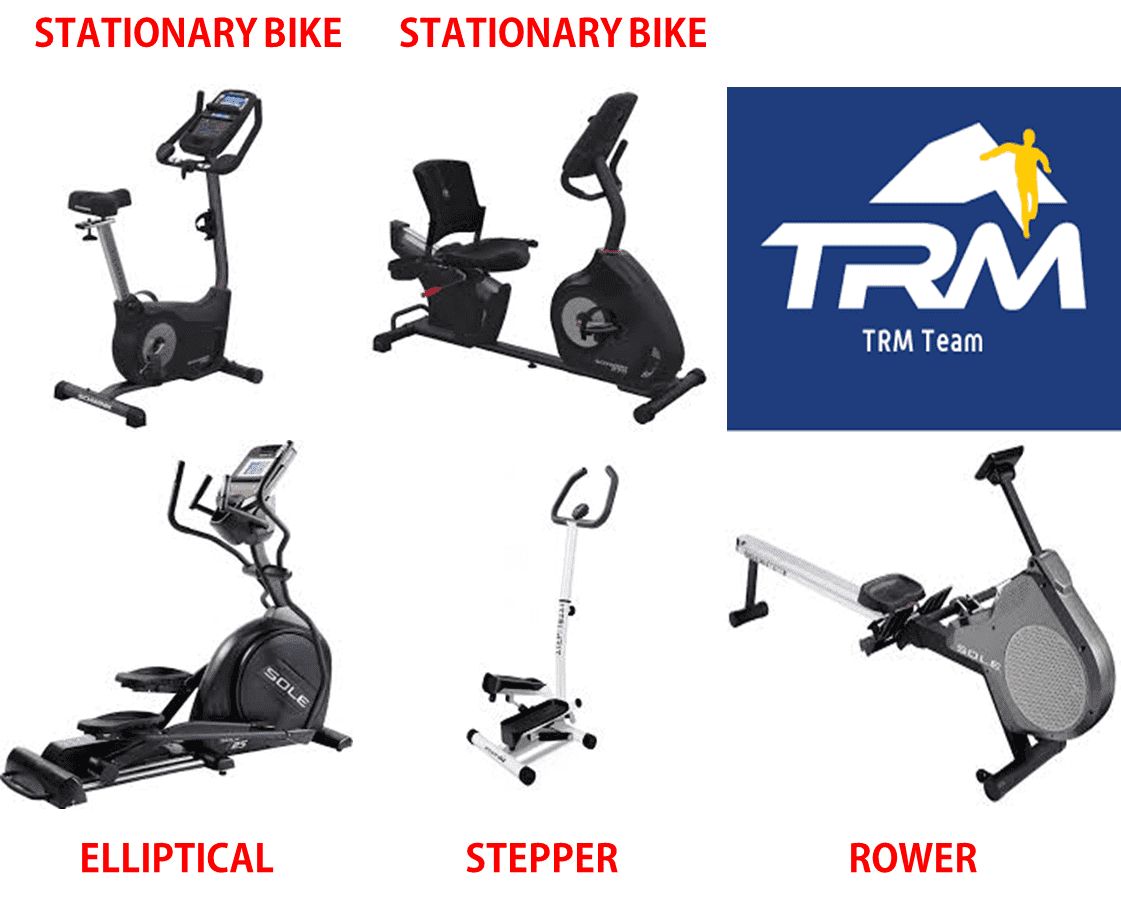
The main options are:
- elliptical trainer: partially simulates the running motion, with a smooth, low-impact movement
- exercise bike (bike): ideal for long aerobic workouts and improving endurance
- spin bike: allows for higher-intensity work compared to a traditional bike, useful for structured sessions and intervals
- roller trainer (indoor cycling rollers): enables very specific and controlled training, maintaining continuous pedaling and working on endurance and rhythm
- stepper: replicates the climbing movement, making it particularly effective for developing strength and muscular endurance specific to trail running
- rowing machine: engages the whole body and combines cardiovascular and muscular work
- incline treadmill: allows you to simulate walking or running uphill, making it one of the most specific tools for trail running.
Each of these machines can be used for different purposes, which we’ll now explore in more detail.
Elliptical: the closest option to running
The elliptical is often considered the machine closest to the running motion, while completely eliminating impact with the ground. This makes it particularly suitable during recovery periods or when you want to reduce joint stress.
Main benefits include:
- continuous and natural movement
- involvement of both lower and upper body
- excellent for prolonged aerobic work.
Using it consistently helps maintain a solid aerobic base even without running.
Incline treadmill: specificity for trail
When used with incline, the treadmill becomes an extremely effective tool to simulate the uphill sections typical of trail running.
Benefits include:
- specific training of the muscles involved in climbing
- ability to control speed and incline
- excellent for strength endurance workouts.
This type of training is particularly useful for those preparing for races with significant elevation gain.
Exercise bike: endurance without impact
The exercise bike is a simple but very effective solution for developing aerobic endurance, especially during long training sessions.
Main strengths include:
- low joint impact
- easy intensity control
- ideal for aerobic zone training.
It’s a perfect choice to maintain training volume without overloading the body.
Spin bike: intensity and control
The spin bike offers a more dynamic experience than a traditional exercise bike, allowing you to work at higher intensities and simulate pace changes similar to those in trail running.
Main advantages:
- greater ability to perform intervals and intensity variations
- more athletic and engaging position
- useful for developing strength and cardiovascular endurance.
It is particularly suitable for structured and more intense sessions.
Roller trainer: precision and continuity
The roller trainer is widely used by advanced cyclists, but it can also be an excellent option for trail runners.
Benefits include:
- precise control of intensity and cadence
- continuous work without interruptions
- great for developing endurance and rhythm.
It allows for highly targeted training, especially when working consistently within specific heart rate zones.
Stepper: specific strength for climbing
The stepper is one of the most specific machines for trail running, as it directly replicates the climbing movement.
Main advantages:
- development of lower-body muscular strength
- targeted work on glutes and quadriceps
- high transferability to real uphill running.
It is particularly useful for improving uphill endurance and preparing for races with significant elevation gain.
Rowing machine: full-body workout
The rowing machine is less specific to running, but extremely useful for overall muscular engagement.
Main benefits:
- activation of most muscle groups
- combination of strength and endurance
- excellent complement to general conditioning.
It can be used as an alternative or in addition to other cardio tools.

best trail running tips, endurance trail running programs, trail runnin injuries, Trail Running Coaches, trail running training