



Best trail running poles: what they are, how to choose and how to use them – Guide 2026
What are the best trail running or ultra trail running poles? This is one of the questions our athletes and followers ask us most often.
In this article, we take a detailed look at different pole models to help you make the right choice.
We will focus on high-performance products, aiming to present the best value for money while considering key performance factors such as:
- weight
- durability
- features useful for ultra trail runners.
To do this, we relied on our personal experience and, for products we have not tested directly, on information available from the best specialized websites.
We also focused specifically on carbon fiber poles, as these products have improved tremendously in recent years and now offer exceptional performanc, especially in ultra trail running.
In this guide, you’ll first find a short introduction, followed by an analysis of the best trail running poles for 2025 and 2026, with a focus on ultralight, foldable models suitable for every type of runner.
Enjoy the reading!
_ _ _ _ _ _
_ _ _ _ _ _ _
Why use poles in trail running?
The use of poles in trail running—especially over long distances and on courses with significant elevation gain—has evolved from being a “choice” into a true race and training strategy.
They act as both a “suspension system” and a “force multiplier,” integrating upper-body power into an activity traditionally dominated by the legs.
Here is a detailed breakdown of why carbon poles are an essential extension of a trail runner’s body.

Reduction of joint stress and injury prevention
This is the most frequently cited advantage, and its long-term impact on a runner’s career is invaluable.
Poles help improve:
- downhill impact management: downhill running generates the highest joint stress. Each step on steep or technical terrain can produce impact forces two to three times body weight. When used correctly, poles actively absorb part of these forces, acting as additional “brakes.”
By partially replacing the braking action of the quadriceps and knee stabilizers, they significantly reduce the risk of inflammation, tendinitis, and the dreaded patellofemoral pain syndrome (runner’s knee). - Load distribution: using poles distributes body weight across four limbs instead of two. This reduces localized muscle fatigue and long-term stress on knee and ankle cartilage and ligaments.
Better balance, stability and safety on technical terrain
When running over rocks, scree, unstable ground or water crossings, balance is precarious and a fall can mean the end of the race.
Poles provide:
- additional contact points: they create a “four-point stance,” dramatically increasing stability. On unstable terrain, you can probe the ground before stepping, reducing the risk of sprains or slips
- quick reaction support: in case of stumbling or loss of traction, leaning on poles can prevent a full fall—turning a potential injury into a minor imbalance.
Uphill support: power transfer and muscle saving
Uphill is where poles become true “turbo boosters.”
They allow:
- extended muscle engagement: poles engage back, shoulders, chest, and arm muscles in propulsion. Instead of relying solely on quadriceps and glutes, you activate a larger muscular chain. This increases push power while distributing effort, giving crucial relief to the legs.
- Optimal trunk angle: poles help maintain a more upright torso, facilitating breathing and oxygen flow. On extreme gradients, they allow you to “pull yourself up,” transforming a grueling hike into efficient forward progress.
Greater energy efficiency over long distances (running economy)
For ultra-trail runners, energy management is the key to success.
Poles improve running economy by ensuring:
- Steady pacing: they help maintain a consistent uphill rhythm, avoiding energy spikes that rapidly deplete glycogen stores.
- Supplementary “fuel”: although using the arms requires energy, that energy often comes from fresher muscle groups compared to fatigued legs. Energy expenditure becomes more evenly distributed, delaying overall fatigue. Studies show that while poles slightly increase total oxygen consumption, they significantly reduce perceived exertion and leg fatigue.
- Late-race assistance: when your legs are destroyed after dozens of kilometers, the ability to push with your arms becomes crucial to keep moving effectively.
In summary, carbon trail running poles are not mere accessories—they are strategic biomechanical devices that optimize propulsion, protect the body from wear and increase safety, ultimately enhancing performance and athletic longevity.
For this reason, their low weight (thanks to carbon) is of vital importance.

What to look for in the best trail running poles
Finding the optimal pole requires balancing six key parameters. Every choice involves a trade-off between performance, reliability, and cost.
Weight: the measure of performance (and fatigue)
In trail running, especially in Ultra races, weight is directly proportional to the muscle fatigue accumulated in the arms and shoulders. Lifting a pole that is even 50 grams heavier hundreds of times can cost hours of energy.
High-end carbon models aim to stay under 150 grams per pole (120 cm), while a weight between 180 and 200 grams is considered an excellent compromise between lightness and strength at a more affordable cost.
The Q/P/R ratio: ultra-lightweight models (under 150g) are expensive and inherently less durable (carbon is more ‘fragile’). For the best ratio, aim for the 160-180 gram range, where the difference in performance is minimal, but the cost savings and gain in durability are significant.
Material: rigidity vs resilience
Carbon fibre is the preferred material due to its exceptional rigidity (energy transfer) and minimal weight.
However, its known weakness is its poor resistance to lateral impacts: unlike aluminium, which bends (plastic deformation), carbon can break cleanly (catastrophic failure).
The main types of carbon used in trail running poles are:
- high modulus carbon (HRC max): maximum lightness and rigidity, but high cost and lower resistance. Used in competition models
- standard carbon or C/Alu alloys: more economical and impact resistant (thanks to the lower carbon modulus or combination with aluminium), but slightly heavier. Offers the best strength/price ratio.
The Q/P/R ratio: if you are not a professional, a pole made of a sturdy carbon alloy or standard modulus carbon offers the durability you need for trail running, protecting your investment.
Folding system: speed and compactness
The ability to quickly store or retrieve poles is essential during a race.
Depending on the folding system, poles can be divided into:
- Z-Fold (or segmented folding): these are the standard for trail running. They consist of 3-4 segments joined by an internal cable (often made of Kevlar). Extremely quick to assemble and disassemble (with a ‘button’ gesture), they are very compact when closed (approximately 35-40 cm). The internal mechanism must be robust and not wear out with dust.
- Telescopic (adjustable): more common in trekking, they are less used in trail racing due to their greater weight and the potential risk of the lock slipping. However, their versatility is useful for those who share equipment or for beginners.
- Monoblock (fixed length): the lightest and most rigid of all, as they have no joints. They are only ideal for those who never have to store them or for Vertical K races. They lack versatility.
The Q/P/R ratio: the Z-Fold system offers the ideal balance. Choose models with a high-quality internal locking mechanism to ensure they do not open or close accidentally.
Grip and strap/glove system
The grip is your constant contact with the pole and directly affects comfort and efficiency.
It is distinguished by several characteristics:
- material:
- EVA (foam): lightweight, soft and offers excellent grip even when wet. It is the modern standard for trail running.
- Cork: absorbs sweat effectively and offers superior thermal comfort (neither too hot nor too cold). It tends to be slightly heavier than EVA.
- Shape: the best trail grips are elongated (or have a foam extension below the main grip). This allows the runner to grip the pole lower when climbing or traversing, without having to adjust the length (known as “side-hilling”).
- Lace/Glove (Shark System): patented systems (such as Leki’s Trail Shark) that allow you to attach your hand to the pole with a lace or detachable glove. This transmits the pushing force directly to the shaft and allows the hand to relax partially, reducing forearm fatigue. It is an efficiency factor that often justifies a higher price.
Locking system: safety and reliability
In folding and telescopic models, locking is essential.
There are three types of locking mechanisms for trail running poles:
- external lever (flick lock): mainly used on telescopic segments, it is quick to adjust and reliable, but can add a little weight
- internal push button: the most common mechanism for Z-Fold poles. A spring-loaded button locks when the pole is fully extended. It must be easy to operate even when wearing gloves
- magnetic/mechanical: hybrid systems, such as those for attaching gloves (Leki), which ensure quick release and attachment for safety or convenience.
The Q/P/R ratio: a proven (often patented) locking system is crucial for safety and reliability. Avoid low-cost models with locking mechanisms that have negative reviews for slippage or premature wear.
Price: justifying the investment
The price range (€70 – €200) reflects the quality and quantity of technology incorporated.
Depending on the cost, poles are divided into:
- low range (up to €100): often lower modulus carbon or composite (carbon/aluminium), with simple EVA grips and basic folding systems. A good starting point for beginners.
- Mid-range (€100 – €170): the golden mean of Q/P/R. Good quality carbon, competitive weight (160-190g), and the introduction of elongated ergonomic grips and reliable locking systems (e.g. C.A.M.P., Raidlight).
- High range (over €170): extreme lightness (under 150g), high modulus carbon, patented glove/quick release systems (e.g. Leki Shark), and competition-optimised design. The price increase here is linked to a marginal reduction in weight and an increase in technical efficiency.
The Q/P/R ratio: for the ideal balance, focus your search on the mid-range (€100-€170). Here you will find carbon that is light enough and systems that are robust enough to withstand the rigours of trail running without breaking the bank.

Top 10 best trail running poles 2026
After thoroughly examining the technical criteria, it is time to apply them to the leading products on the market.
Our final selection for 2025 focuses on models that achieve the best balance between the extreme lightness of carbon, adequate strength for trail use and, above all, a price that justifies the technology offered.
Here is the final selection of the best carbon trail running poles, with an analysis that goes beyond simple weight.
| Brand / Model | Weight (per stick) | Price (pair) | Key notes |
|---|---|---|---|
| Black Diamond Distance Carbon | ≈ 130 g | €170–190 | 100% carbon, fixed length, top of the range for ultratrail |
| Raidlight Ultralight Carbon | 100–110 g | €160–170 | Made in France, 100% carbon, excellent weight/price ratio |
| LEKI Ultratrail FX.One Superlite | 129–142 g | €160–180 | Foldable in 3 sections, Trail Shark handle, specifically designed for competitions |
| AONIJIE 3K Carbon Fiber E4214 | 129–134 g | €75–90 | 3K carbon, excellent weight at a competitive price, ideal for secondary use |
| C.A.M.P. Sky Carbon EVO | ≈ 200 g | €90–120 | 5-segment folding, micro-adjustment tension system |
| Salomon S/Lab Ultra Carbon | ≈ 135 g | €160–170 | Elite version, excellent weight-stiffness balance |
| Komperdell FXP Carbon Ultra | ≈ 140 g | €160–170 | Automatic FXP system, robust and precision construction |
| Gipron Montblanc Carbon 310 Matrix | ≈ 140 g | €135-150 | Made in Italy, 4-section folding, practical and compact |
| TSL Outdoor Trail Carbon 4 Cork | ≈ 140–150 g | €130–140 | Cork handle + magnetic lock, high comfort |
| Naturehike ST10 Ultralight | ≈ 150 g | €70–80 | Good budget/weight compromise, suitable for non-competitive use |
Detailed analysis of models: finding the perfect balance
The selection of models presented here covers the entire spectrum of trail runners’ needs: from the search for extreme lightness (and the associated cost) to the need for a sturdy and economical pole.
The analysis focuses on why these poles stand out in terms of the crucial relationship between weight, price and resistance (Q/P/R).
Gipron Montblanc Carbon 310 Matrix
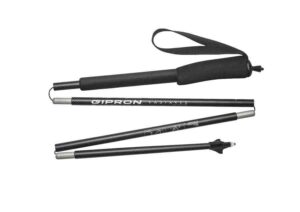 Weight and Material: 140 g per pair (120 cm), 100% carbon.
- System: 4-section foldable, folds down to approximately 40 cm for easy transport
- Price: €115-135
- Q/P/R Analysis: this is a balanced option in the world of foldable trail running poles. The 4-section folding system is practical and compact: when closed, they measure approximately 40 cm, making them easy to store in a backpack or pole holder during technical sections. The foam grip with fixed strap is comfortable even on longer outings.
Raidlight Ultralight Carbon
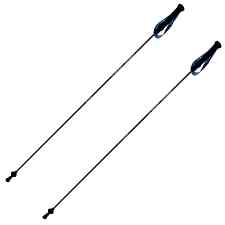 Weight and Material: 100–110 g, Carbon
- System: Z-fold folding
- Grip: 3D EVA
- Price: €160–170
- Q/P/R Analysis: it strikes an excellent balance between extreme lightness and a slightly lower price point than other top-of-the-range models. The Made in France design emphasises lightness and compactness. It is a solid choice for those who prioritise weight and are willing to pay a premium for craftsmanship and performance, but still want a foldable pole.
LEKI Ultratrail FX.One Superlite
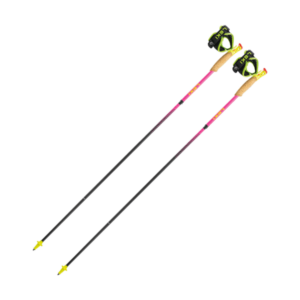 Weight and Material: 129–142 g, carbon.
- System: foldable in 3 sections.
- Handle: Trail Shark with detachable glove.
- Price: €160–180.
- Q/P/R Analysis: Leki’s added value lies in the Trail Shark system, which optimises thrust and energy efficiency by allowing quick attachment and detachment, essential when refuelling or on flat sections. Although not the lightest, its weight is still competitive, and it is considered by many to be the best model for thrust efficiency over long distances.
Black Diamond Distance Carbon Z
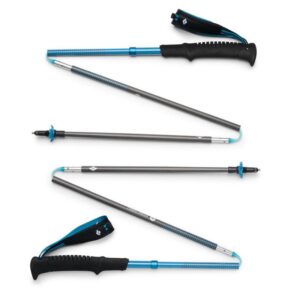
- Weight and Material: ≈ 140 g, Carbon
- System: Z-fold folding
- Price: €150–170
- Q/P/R Analysis: this is the folding version of the Distance Carbon, a masterpiece of balance. It offers a lightness close to that of extreme models but with the practicality and reliability of the Z-fold system, crucial for quickly storing the poles. It is often cited as the best Q/P/R compromise in the high-end range, ideal for runners who need a sturdy and easily stowable racing tool.
Komperdell FXP Carbon Ultra
- Weight and Material: ≈ 140 g, Carbon
- System: foldable with automatic FXP technology
- Price: €140–170
- Q/P/R Analysis: Komperdell offers a very reliable carbon construction, but stands out for its FXP system. This automatic locking and assembly mechanism is extremely fast, making the poles ready for use in an instant. It is a premium option for those looking for precision craftsmanship and speed of use.
Salomon S/Lab Ultra Carbon
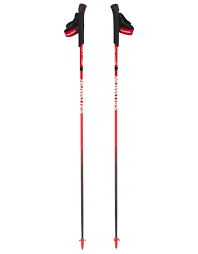 Weight and Material: ≈ 135 g, Carbon
- System: foldable
- Price: €140–150
- Q/P/R Analysis: developed in collaboration with top-level athletes, S/Lab poles are optimised for trail running ergonomics. They offer excellent torsional rigidity and minimal weight. They are recommended for runners looking for maximum compactness and a design specifically geared towards performance.
TSL Outdoor Trail Carbon 4 Magnetic Cork
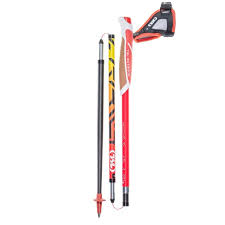 Weight and Material: ≈ 140–150 g, Carbon.
- System: 4 magnetic sections.
- Handle: cork with magnetic lock
- Price: €110–120
- Q/P/R Analysis: this model is the top choice for those who run long distances and seek maximum comfort. The cork handle is superior for sweat management and thermal insulation. The magnetic system facilitates quick release of the lace. Excellent value for money in the mid-range.
C.A.M.P. Sky Carbon EVO
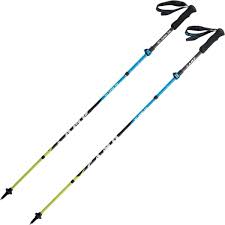 Weight and Material: ≈ 200 g, Carbon
- System: 5-segment folding with internal cord and micro-adjustment of tension
- Price: €80–100
- Q/P/R Analysis: the mix of carbon and aluminium offers a good balance between weight and strength: at ~400 g per pair, it is in a lower range than top competition models, but still adequate for long walks or non-extreme technical trails. Micro-adjustment of tension with internal cord and aluminium clip make fitting quick and secure, while differentiated ergonomic straps improve comfort and control.
AONIJIE 3K Carbon Fiber E4214
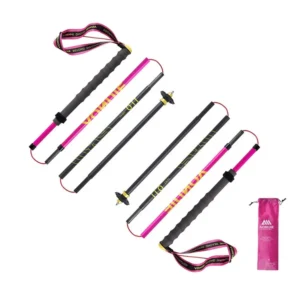
- Weight and Material: 129–134 g, 3K Carbon
- System: foldable
- Price: €75–90
- Q/P/R Analysis: surprising for its featherweight at an entry-level price point. It uses 3K carbon, a specification that tends to be more robust but less refined than high-modulus carbon. It is an excellent alternative for those on a tight budget or looking for an extremely lightweight spare pair, accepting that the durability and reliability of the locking system may not match premium brands.
Naturehike ST10 Ultralight Telescopic
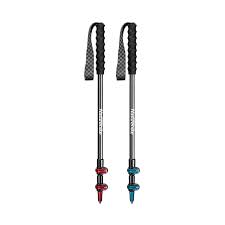 Weight and Material: ≈ 150 g, Carbon
- System: Telescopic (adjustable)
- Price: €60–80
- Q/P/R Analysis: this is the most versatile option in terms of length, while maintaining an acceptable weight thanks to the carbon. The telescopic system is heavier and slower than the Z-Fold, so less suitable for racing, but perfect for fast hiking, light trekking or as an adjustable pole for beginners. The best Q/P if versatility is more important than storage speed.
Advanced technical considerations: what to know before buying
Purchasing carbon trail running poles requires a clear understanding of the technical specifications that define their behavior on the trail.
Every component is an essential gear in optimizing the weight/performance ratio.
Shaft material: pure carbon, aluminum or hybrid
Material choice is the primary factor influencing weight, price, and durability.
-
Carbon (carbon fiber):
-
Advantages: extremely lightweight (minimizing weight is essential in trail running) and exceptionally stiff. The stiffness ensures that the energy applied during the push is transferred immediately to the ground without being lost in pole flex. Ideal for competition and performance.
-
Disadvantages: high cost. Its rigidity makes it fragile under lateral impacts (catastrophic breakage).
-
-
Aluminum (7075 alloy):
-
Advantages: much more affordable and, above all, far more resistant to impacts and torsion. When subjected to excessive loads, aluminum bends (plastic deformation) rather than snapping, offering greater reliability and durability on highly technical terrain or in extreme conditions. Suitable for technical hiking and heavy use.
-
Disadvantages: heavier and less stiff than carbon, which reduces push efficiency.
-
-
Hybrid poles (carbon + aluminum):
-
Optimal compromise: many brands use aluminum sections in the areas most prone to breakage (for example, the lower segment) and carbon in the main shaft. They offer an excellent balance between lightness (thanks to carbon) and durability (thanks to aluminum) at a mid-range price. Ideal for the ultra trail runner seeking a balance between performance and safety.
-
Folding system: speed, compactness and rigidity
The folding system determines how easily the poles can be stored in a backpack or running belt.
-
Z-Fold (or folding segment poles):
-
Features: three or four segments connected by an internal cable (often made of Kevlar). They can be assembled or disassembled in just a few seconds by pressing a button or pulling the handle.
-
Ideal for: trail running and racing. Maximum compactness (usually 35–40 cm when folded) and light weight. The system is inherently stiff.
-
-
Telescopic (adjustable):
-
Features: two or three sections that slide into one another, locked by an external lever system (Flick Lock) or a twist-lock mechanism.
-
Ideal for: trekking and versatile use. Allows on-the-go length adjustment (useful on traverses or when sharing poles with others). Heavier and slower to store compared to Z-Fold models.
-
-
Fixed-length (one-piece):
-
Features: a single piece of carbon.
-
Ideal for: maximum performance. Offers the absolute highest level of lightness and stiffness, but cannot be stored in a small backpack. A niche choice for Vertical races or sprint events.
-
Grip and strap system
The interface between the runner and the pole is crucial for both comfort and efficiency.
-
EVA (foam):
-
Advantages: extremely lightweight, soft, and provides excellent grip even when hands are sweaty or wet. Very common in trail running.
-
-
Cork:
-
Advantages: improves thermal comfort (it doesn’t overheat or get cold like other materials) and naturally absorbs sweat. Ideal for long distances. It tends to be slightly heavier.
-
-
Trail Shark Glove (or quick-release systems):
-
Advantages: proprietary systems (such as the Leki Trail Shark) that replace the traditional strap with a glove that quickly attaches and detaches from the handle (often via a magnetic mechanism). It significantly improves propulsion and energy efficiency, allowing the hand to relax. A must for runners seeking maximum power transfer.
-
-
Extended grip: the handle extends downward with EVA foam for about 15–20 cm. This allows the runner to grip the pole lower on climbs without stopping to adjust the length.
Our TRM Coaches suggest making full use of the glove and strap system, especially on uphill sections, to improve propulsion. However, it is essential to be cautious in downhill sections or on rocky terrain. If a pole gets stuck in a crack, the lever effect can strain the wrist and potentially cause injury (even fractures).
Tip and basket: grip and terrain adaptation
The tip of the pole provides the necessary traction.
The main features of tips and baskets are:
-
Tungsten (or carbide) tip:
-
function: this is the standard and hardest material used. It provides maximum grip on hard surfaces such as rock, ice, roots, and concrete, preventing slipping. Wear is minimal.
-
-
Small baskets (or trail baskets):
-
function: they have a reduced diameter. They are ideal for trail running because they don’t get caught between rocks or vegetation.
-
-
Large baskets (or snow/mud baskets):
-
function: they have a wider diameter. They are designed to prevent the pole from sinking into soft terrain such as fresh snow, deep sand, or thick mud. Many trail poles allow you to replace the baskets.
-
Understanding these four technical elements allows you to base your choice not only on price or weight, but to select the carbon pole that perfectly matches your running style and the terrain you tackle.

Which pole should you choose based on your trail runner profile?
In trail running, “the best” is subjective—it’s the pole that best fits your progression style, terrain, and energy management.
Choosing the right model means optimizing your investment (price), quality, and performance.
This practical guide helps you identify the carbon pole with the best Quality/Price/Performance ratio for your specific category.
| Profilo Atleta | Modello Consigliato | Peso (per bastone, 120 cm ca.) | Fattore Determinante | Motivazione per il Q/P/R |
|---|---|---|---|---|
| Ultra-Runner Competitivo (Efficienza) | LEKI Ultratrail FX.One Superlite | 129 – 142 grammi | Efficienza di Spinta | Il sistema Trail Shark garantisce il massimo trasferimento di potenza e velocità di gestione. Leggerezza competitiva, essenziale per la gestione della fatica nelle Ultra. |
| Trail Tecnico in Montagna (Affidabilità) | Black Diamond Distance Carbon Z | 140 grammi | Praticità e Affidabilità | Ottimo compromesso peso/robustezza con il collaudato sistema Z-Fold. Facilmente stivabile, abbastanza resistente per gli urti inevitabili su ghiaioni e rocce. |
| Gare Verticali / Salita Pura | Raidlight Ultralight Carbon | 100 – 110 grammi | Peso Record | Tra i più leggeri della categoria. Perfetto per la salita pura e per le gare Vertical, dove ogni grammo conta in termini di rapidità e reattività. |
| Allenamenti Regolari / “Made in Italy” | Gipron Mont Blanc Carbon 310 Matrix | 140 grammi | Leggerezza e Qualità | Prodotto in Italia, pratico e compatto grazie al sistema di chiusura in 4 sezioni. Ideale per chi cerca eccellenza artigianale e performance costante in allenamento. |
| Budget Contenuto / Entry-Level | AONIJIE 3K Carbon Fiber E4214 | 129 – 134 grammi | Miglior Prezzo/Peso | Offre un peso in carbonio estremamente leggero a un costo entry-level. Ottimo per testare l’uso dei bastoncini o per runner con budget limitato. |
| Comfort ed Ergonomia Lunga Distanza | TSL Outdoor Trail Carbon 4 Cork | 140 – 150 grammi | Comfort Sughero + Magnetico | L’impugnatura in sughero minimizza irritazioni e sudore. Il sistema magnetico ne aumenta la praticità. Ideale per gare da 100 km o più. |
| Versatilità e Regolabilità (Escursionista Veloce) | Naturehike ST10 Ultralight | 150 grammi | Regolabilità | Modello in carbonio leggero con regolazione telescopica. Non ottimizzato per il racing puro, ma molto versatile per escursioni miste e uso non agonistico. |
| Racing Élite / Massima Compattezza | Salomon S/Lab Ultra Carbon | 135 grammi | Rigidità e Design Performance | Sviluppato con atleti di alto livello, offre eccellente rigidità torsionale e grande compattezza da chiuso. Ideale per chi vuole massima efficienza tecnica nelle gare lunghe. |
| Versatilità Trail & Trekking Leggero | C.A.M.P. Sky Carbon EVO | 200 grammi | Robustezza + Regolabilità | Combina carbonio e alluminio per un buon equilibrio tra peso e resistenza. Regolabile e più robusto rispetto ai modelli ultra-race, adatto anche a trekking veloci. |
| Rapidità di Apertura / Tecnologia Avanzata | Komperdell FXP Carbon Ultra | 140 grammi | Sistema FXP Automatico | Il meccanismo FXP consente apertura e blocco automatico rapidissimi. Ottima scelta premium per chi cerca velocità operativa e affidabilità austriaca in gara. |
Analysis of your specific profile
Evaluate these trail runner profiles and decide which one you identify with most.
Competitive Ultra Runner – maximum efficiency
For those aiming for podium finishes or the fastest possible Ultra completion time, the focus shifts from pure weight to propulsion efficiency.
The LEKI Ultratrail FX.One Superlite dominates this category.
Its Trail Shark system optimizes upper-body force usage, delaying leg fatigue.
Higher investment, but unmatched energy savings and quick handling over extreme distances.
Technical mountain trail – intelligent durability
When terrain consists of rocks, roots, and scree, impact resistance becomes critical.
The Black Diamond Distance Carbon Z offers an excellent balance.
At around 140 g, it maintains lightweight performance while offering proven Z-Fold reliability—ideal in hostile environments where pole failure could compromise safety.
Vertical races / pure climbing – extreme lightness
In Vertical Kilometer races, every gram counts more than versatility.
The Raidlight Ultralight Carbon (100–110 g) represents minimalist philosophy applied to trail running.
Maximum inertial reduction during repeated uphill pushes, accepting reduced versatility and structural delicacy for peak lightness.
Regular training / made in Italy – daily balance
Not everyone seeks records—many want reliability for frequent training.
The Gipron Mont Blanc Carbon 310 Matrix (~140 g) embodies this balance.
Four-section foldable carbon structure, compact design, Italian craftsmanship.
Not the lightest, but excellent Q/P/P ratio for year-round runners.
Long-distance comfort – ergonomic focus
In 24-hour races or longer, hand comfort impacts performance.
The TSL Outdoor Trail Carbon 4 Cork offers cork grip and magnetic system for superior sweat management and aid-station practicality.
Slightly heavier (140–150 g), but significantly improved long-term comfort.
Trail & light trekking versatility – total adaptability
If you alternate trail running and fast hiking, versatility outweighs extreme lightness.
The C.A.M.P. Sky Carbon EVO (~200 g) combines carbon and aluminum for durability and adjustability.
The Naturehike ST10 Ultralight offers lightweight carbon with telescopic adjustment.
Less race-oriented, ideal for mixed use.
Mechanical innovation – operational precision
Some runners prioritize deployment speed and locking security.
The Komperdell FXP Carbon Ultra stands out for its automatic FXP system.
Instant opening, precise locking.
Premium choice for mechanical reliability and Austrian engineering quality.
Elite racing / maximum compactness
For race-oriented stiffness and compact design, the benchmark is the Salomon S/Lab Ultra Carbon (~135 g).
Designed for elite performance, offering excellent torsional rigidity and compact folded dimensions.
Ideal for advanced runners seeking high technical efficiency.
Entry-level / budget-friendly – smart start
For beginners or cost-conscious runners, the AONIJIE 3K Carbon Fiber E4214 (~130 g) offers remarkable value.
Carbon-level lightness at less than half the price of market leaders.
Trade-off: long-term durability and locking system refinement.
Smartest option for minimizing financial risk while enjoying carbon performance benefits.
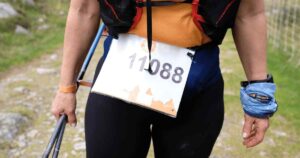
Technical comparison table: summary of price/weight/strength ratio
This section provides a technical and analytical overview of the most relevant carbon pole models on the trail running market.
The analysis focuses on the correspondence between technical specifications (weight, locking system and grip) and price positioning.
| Modello | Peso (g) | Sistema | Impugnatura | Prezzo indicativo (€) | Note |
|---|---|---|---|---|---|
| Salomon S/Lab Ultra Carbon | ~135 g | Piega in 3 sezioni | EVA / Foam | 150–180 | Carbonio race-oriented, clic rapido, comfort e potenza su distanze lunghe. |
| Black Diamond Distance Carbon Z | ~140 g | Pieghevole Z-Fold | EVA | 150–170 | Leggero, stivabile e affidabile per trail tecnici. (dati da articolo) |
| LEKI Ultratrail FX.One Superlite | ~137 g | Z-Fold / Trail Shark | Trail Shark | 160–180 | Prestazioni top, sistema di spinta efficiente. (dati da articolo & brand) |
| Raidlight Ultralight Carbon | ~100–110 g | Pieghevole Z-Fold | EVA 3D | 160–170 | Ultra-leggero per verticali e salita pura. (dati da articolo) |
| Gipron Mont Blanc Carbon 310 Matrix | ~140 g | Pieghevole 4 sezioni | Spugna | 135–150 | Made in Italy, compatto e bilanciato. |
| AONIJIE 3K Carbon Fiber E4214 | ~129–134 g | Pieghevole Z-Fold | EVA | 75–90 | Economico e leggero, entry-level. (dati da articolo) |
| TSL Outdoor Trail Carbon 4 Cork | ~140–150 g | Magnetico 4 sezioni | Sughero | 130–140 | Comfort elevato per lunga distanza. (dati da articolo) |
| Naturehike ST10 Ultralight | ~150 g | Regolabile telescopico | EVA | 70–80 | Versatile ed economico, uso misto trekking/trail. (dati da articolo) |
| C.A.M.P. Sky Carbon EVO | ~200 g | Pieghevole con regolazione interna | EVA / Soft grip | 90–110 | Carbonio + alluminio, robusto e versatile stab. |
| Komperdell FXP Carbon Ultra | ~167 g | Sistema FXP automatico | Trail Pro Tape | 190–210 | Apertura automatica rapida, premium e compatto. |
Detailed Technical Analysis
The table clearly highlights the different strategies adopted by manufacturers to maximize the Quality/Price/Performance (Q/P/P) ratio.
The race for minimum weight (Salomon & Raidlight)
These models demonstrate that it is possible to drastically reduce weight without sacrificing material quality.
The Raidlight Ultralight Carbon (100–110 g) represents minimalist philosophy applied to trail running.
It is designed for Vertical races and pure climbing sections, where every gram reduces inertial effort during pole propulsion. The carbon used is extremely lightweight but requires caution on highly technical terrain.
Alongside it, the Salomon S/Lab Ultra Carbon (~135 g) introduces a more modern racing vision: not just lightness, but also torsional rigidity and advanced ergonomics.
It is less extreme than the Raidlight, but more balanced for long races and variable terrain.
System balance (Black Diamond & LEKI)
These models represent the premium segment where Q/P/P is managed by balancing lightweight construction with system reliability.
The Black Diamond Distance Carbon Z (~140 g) focuses on the structural simplicity of the Z-Fold system: mechanical, intuitive, and durable.
It is one of the absolute benchmarks in terms of overall balance.
The LEKI Ultratrail FX.One Superlite (129–142 g) adds a differentiating element: the Trail Shark system.
This is not just a strap, but a mechanism that optimizes power transfer. The added value is not purely in weight reduction, but in biomechanical efficiency.
Budget-to-weight compromise (AONIJIE & Naturehike)
Low-cost models such as the AONIJIE 3K Carbon Fiber E4214 and the Naturehike ST10 Ultralight have had a revolutionary impact.
They offer carbon poles weighing between 130–150 grams—excellent for their price category.
Cost savings typically come from the use of lower-modulus carbon (more resilient but less stiff) and less refined or non-patented locking systems and grips.
These models represent the best absolute value for runners focused primarily on achieving carbon lightness at the lowest price.
Functional advantages (TSL & C.A.M.P.)
These models demonstrate that a pole is not just a tube.
The TSL Outdoor Trail Carbon 4 Cork (140–150 g) prioritizes comfort: cork grip and magnetic system improve sweat management and aid-station usability.
The C.A.M.P. Sky Carbon EVO (~200 g) sacrifices weight to provide increased durability and adjustability thanks to its carbon + aluminum combination.
Mechanical innovation (Komperdell)
The Komperdell FXP Carbon Ultra (~140 g) stands out for its automatic FXP system.
Here, the strategy is not to minimize weight at all costs, but to speed up deployment and locking with mechanical precision.
The perceived value lies in operational practicality and Austrian build quality.
It is a premium choice for those seeking reliability and speed without technical compromise.
Evolved quality-price balance (Gipron)
The Gipron Mont Blanc Carbon 310 Matrix (~140 g) positions itself intelligently by offering competitive weight, a 4-section folding system, and Italian manufacturing.
It is not the lightest option, but it balances compactness, solidity, and a more accessible price compared to top-tier international brands.
Ideal for runners seeking consistent training performance without entering the ultra-premium segment.
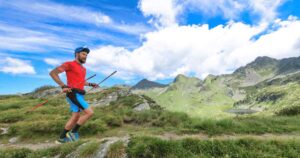
Practical tips: finalizing your choice
After analyzing materials, systems, and models, the final decision should be based on how well technical specifications align with your personal needs.
Here is an essential checklist before purchasing your carbon trail running poles.
Choosing the correct length: the crucial angle
Correct length is fundamental for propulsion efficiency and comfort.A pole that is too long wastes energy; one that is too short limits power output.
As a general rule, hold the pole with the tip on the ground and your arm bent—the elbow should form roughly a 90-degree angle.
For trail running (where propulsion is more forward-oriented), many runners prefer slightly shorter poles than in trekking:
-
standard guideline: height (cm) × 0.68–0.70
-
example: a 175 cm runner typically chooses the closest available size (e.g., 120 cm).
The most common range in trail running is 110–125 cm.
If you choose a fixed-length (one-piece) model, precision in sizing is critical.
Folding system: speed vs adjustability
If you race and prioritize quick storage and lightness, choose Z-Fold (foldable) models. The time saved when deploying and storing poles accumulates during competition.
If you do mixed hiking or trekking and need to adapt length to varying slopes—or share poles—consider telescopic models. Keep in mind they add weight and introduce potential slippage points.
Weight: the “under 140 grams” target
Ultra-light models (under 140 grams per pole) represent the golden standard in trail running.
If a pole falls into this category (such as the Black Diamond Distance Carbon Z or the LEKI Ultratrail FX.One Superlite), it is optimized for performance and energy efficiency.
Models weighing between 140–200 grams remain a solid compromise, especially for those seeking stronger carbon construction or adjustable systems. The difference is noticeable but acceptable for most runners.
Grip: the key to efficiency
If your primary goal is propulsion and maximum power transfer, a glove-style attachment system such as the Trail Shark (used by LEKI Ultratrail FX.One Superlite) is highly recommended. It improves technique and reduces forearm fatigue.
If your priority is long-distance hand comfort, cork grips are superior for sweat management and irritation reduction.
For versatility, ensure the grip includes an EVA extension below the main handle. This allows you to grip lower on traverses or short climbs without adjusting pole length.
Budget: where the best value lies
Price is the final factor in the Q/P/P equation:
-
Top-tier models (€170+): maximum lightness (~140 g) and advanced technologies (e.g., Shark system or monobloc). Investment in extreme performance.
-
Best value (€100–170): excellent Q/P/P ratio. Includes branded carbon folding models that balance lightness with sufficient durability (example Black Diamond Distance Carbon Z, TSL Outdoor Trail Carbon 4 Cork, Komperdell FXP Carbon Ultra).
-
Budget options (€70–100): models like AONIJIE 3K Carbon Fiber E4214 or Naturehike ST10 Ultralight. Lightweight carbon at lower cost, but higher long-term durability risk. Ideal for beginners.
By choosing based on these five criteria, you can ensure that your carbon poles are an optimal investment, perfectly calibrated for your adventures on the trails.

Maintenance and durability of carbon: extending the life of your investment
Carbon fiber poles represent a significant investment, and their durability depends heavily on proper care.
Unlike aluminum, carbon is less tolerant of neglect. Following these simple maintenance practices ensures that the price/durability ratio remains optimal over time.
Clean joints and tips regularly (post-run)
Mud, dust, and sand are the number one enemies of folding and locking systems. These abrasive particles can scratch the carbon shaft and, even worse, compromise the internal mechanism (cables, springs, or friction systems).
After every outing on wet or muddy terrain, fully disassemble the segments (if telescopic or Z-fold) and clean them with a damp cloth, removing all traces of dirt. Let them air dry before closing them again.
Avoid violent lateral impacts
Carbon fiber is rigid but not as flexible as aluminum. A strong lateral impact—such as a pole getting wedged between two rocks and stressed by body weight—can cause a clean, irreparable break.
Develop a running technique in which the poles always remain aligned with your body. Be especially cautious in narrow passages, scree sections, and when storing them in your pack during a run.
Check the locking system before every outing
A locking system that slips (in telescopic models) or does not engage properly (in Z-fold models) not only reduces push efficiency but can also cause falls.
What to check:
-
Telescopic (Flick Lock): check the lever tension. If the pole slips under load, slightly tighten the adjustment screw on the lever lock.
-
Z-Fold: ensure the locking button fully clicks into place and that the segments have no play or wobble when the pole is fully tensioned. If the internal cable is loose, the pole will not transmit force correctly.
Store poles closed and dry
Never store carbon (or aluminum) poles while wet. Internal moisture accelerates oxidation of springs and internal metal components, compromising performance.
Always store poles folded/closed (if Z-fold) or slightly loosened (if telescopic) to avoid constant pressure on locking mechanisms and internal cables.
Keep them in a cool, dry place, away from direct sunlight, which over time can degrade resins and grip foams.
By following these simple steps, you will ensure that your carbon trail running poles maintain their lightness and reliability for many seasons of running.
Conclusion: what are the best trail running poles?
Choosing carbon trail running poles is the result of a careful assessment of the desired performance and available budget. There is no single ‘best’ answer, but rather an answer that perfectly suits your runner profile.
Here is the definitive summary to guide your final decision, based on an analysis of the Q/P/R ratio and running style.
| Se il tuo obiettivo è… | Il Modello da Scegliere è… | Fattore Chiave |
|---|---|---|
| Massima leggerezza e prestazioni (gare) | Raidlight Ultralight Carbon (~100–110 g) o Salomon S/Lab Ultra Carbon (~135 g) | Peso minimo e rigidità torsionale |
| Efficienza di spinta ed equilibrio race-oriented | LEKI Ultratrail FX.One Superlite (~129–142 g) | Efficienza biomeccanica (Trail Shark) |
| Eccellente equilibrio affidabilità/leggerezza | Black Diamond Distance Carbon Z (~140 g) | Bilancio Q/P/R nella fascia alta |
| Qualità artigianale e performance bilanciate | Gipron Mont Blanc Carbon 310 Matrix (~140 g) | Finiture italiane e compattezza in 4 sezioni |
| Tecnologia meccanica avanzata | Komperdell FXP Carbon Ultra (~140 g) | Sistema FXP automatico: apertura/bloccaggio rapido |
| Comfort e distanze lunghe (Ultra-Trail) | TSL Outdoor Trail Carbon 4 Cork (~140–150 g) | Impugnatura in sughero + sistema magnetico |
| Versatilità escapismo trail/trekking veloce | C.A.M.P. Sky Carbon EVO (~200 g) | Robustezza e compattezza regolabile |
| Budget contenuto e carbonio leggero | AONIJIE 3K Carbon Fiber E4214 (~129–134 g) | Miglior peso al miglior prezzo |
| Versatilità per escursioni miste | Naturehike ST10 Ultralight (~150 g) | Regolabile, uso misto trekking/trail |
The final verdict
If every second counts and you’re chasing maximum race efficiency:
-
the LEKI Ultratrail FX.One Superlite is the absolute benchmark for propulsion efficiency thanks to the Trail Shark system, which optimizes power transfer and reduces energy dispersion
-
the Raidlight Ultralight Carbon is the minimalist choice for vertical races and pure climbs: among the lowest weights in its category
-
the Salomon S/Lab Ultra Carbon offers a more modern race approach: lightweight, rigid, and compact—ideal for fast and technical courses
If you want a race-ready pole that is also robust and manageable:
-
the Black Diamond Distance Carbon Z is the industry benchmark: around 140 g, proven Z-Fold system, and well-established reliability
-
the Komperdell FXP Carbon Ultra adds technological value with its automatic FXP system, ideal for those seeking rapid deployment and mechanical precision
-
the Gipron Mont Blanc Carbon 310 Matrix represents artisanal balance: compact, solid, and offering excellent value for money.
When your race exceeds 10–15 hours, comfort becomes performance:
-
the TSL Outdoor Trail Carbon 4 Cork stands out thanks to its cork grip and magnetic system, improving ergonomics and aid-station practicality.
If you alternate between running, hiking, and broader outdoor use:
-
the C.A.M.P. Sky Carbon EVO is more robust and adjustable—perfect for mixed use
-
the Naturehike ST10 Ultralight offers telescopic adjustment and an affordable price, suitable for those seeking flexibility.
If you want the benefits of carbon without a major investment:
-
the AONIJIE 3K Carbon Fiber E4214 is the smartest entry-level choice: competitive weight (around 130 g) at an accessible price point.
In conclusion, investing in a high-quality carbon fiber trail running pole is not a luxury—it is an essential biomechanical strategy.
It allows you to improve efficiency by distributing effort to the upper body, protect your joints (knees and ankles) from downhill impact forces, and tackle every trail with greater stability and confidence.
Choose the model that matches your objective and prepare to improve your uphill performance while conserving energy on descents.
_ _ _ _ _ _
If you’re interested in learning more about trail running and its variations, visit the Trail Running Movement Blog.
There you can access a wide range of free resources dedicated to enthusiasts and professionals in the sport:
-
Personalized training programs: specific training plans to improve endurance, speed, and technique.
-
Nutrition programs and advice: meal plans and hydration strategies to maximize performance.
-
Injury prevention: tips to reduce injury risk and enhance recovery.
-
Race strategy plans: learn how to tackle extremely demanding races, manage weather conditions, and fuel effectively during competition.
-
Trail Running Camp: immersive training camps led by TRM professional coaches.
-
Gear and equipment reviews: in-depth analyses of shoes, packs, and technical apparel.
Don’t miss this opportunity for growth and improvement.
Join the Trail Running Movement community and live your passion for running in nature to the fullest.
Or subscribe to the TRM News Newsletter and learn the tricks and secrets of elite athletes.
_ _ _ _ _ _
Frequently Asked Questions (FAQ)
1. What is the main difference between carbon and aluminum poles for trail running?
Carbon is preferred in high-performance trail running because it is significantly lighter and much stiffer, maximizing propulsion transfer.
However, aluminum is more resistant to lateral impacts and torsion: it bends (but rarely breaks), whereas carbon can snap cleanly.
Choose carbon for performance; aluminum for maximum durability on very aggressive terrain.
2. How do I choose the correct carbon pole length?
The basic rule is that your arm should form a 90° angle when holding the pole with the tip on the ground.
For trail running, the most commonly used formula is:
Height (cm) × 0.68
If the result is 119 cm, choose the closest available size (e.g., 120 cm).
If purchasing a fixed-length (one-piece) model, precision is essential.
3. Are Z-fold (foldable) poles as durable as telescopic ones?
Z-fold poles are the standard in trail running because they are extremely fast to assemble/disassemble and highly compact.
When tensioned, they are generally very rigid.
High-quality models (such as those from Black Diamond or LEKI) feature highly reliable locking systems and internal Kevlar cables.
Telescopic poles offer greater adjustability but usually add weight and may slip if the locking mechanism is not well maintained.
4. Is the detachable glove system (e.g., LEKI Trail Shark) worth the extra cost?
Yes—for ultra-trail runners and those focused on efficiency.
The glove attachment connects directly to the grip, allowing force transmission through the wrist and forearm without constantly gripping the handle. This improves propulsion efficiency and reduces forearm and hand fatigue over long distances.
5. What is the best option if I have a limited budget but still want lightweight carbon?
In the under-€100 price range, brands such as AONIJIE (E4214 model) and Naturehike offer surprisingly lightweight carbon poles (around 130–150 g).
They provide the best absolute Price/Weight ratio and are ideal for beginners or as a backup pair. Keep in mind that long-term durability and finishing quality will not match premium models.
6. Is an ultralight pole (under 140 g) really necessary?
Yes—for competitive trail running.
Considering that you will lift and plant your poles thousands of times during an ultra race, every gram saved translates into conserved energy.
The 140 g per pole threshold is the racing benchmark, balancing lightness with acceptable durability.
If you do not compete, a carbon model up to 180 g remains an excellent option.
7. How should I maintain carbon poles to prevent breakage?
Maintenance is crucial.
The golden rule is to keep joints and segments clean and dry.
Mud and dust can damage internal mechanisms. After use, clean segments and tips thoroughly and allow them to dry completely before storage.
Above all, avoid violent lateral impacts that could cause shaft breakage.
8. Can I use carbon poles for trekking as well?
Yes—but with caution.
Carbon trail running poles (especially ultralight Z-fold models) are optimized for speed and minimum weight, making them less suitable for heavy loads or extremely technical terrain where lateral breakage risk is higher.
If you trek with a heavy backpack, a hybrid (carbon/aluminum) or full aluminum pole may offer greater durability and peace of mind.
_ _ _ _ _ _
#trailrunningpoles #trailpolesa #blackdiamond #leki #TSL #Aonijie #gipron #lasportiva #salomon #TrailRunning #UltraTrail #SkyRunning #MountainRunning #EnduranceTrail #ExtremeTrail #TrailRunningMovement #AthleticTrainingTrailRunning #TablesTrail Running #RacePlanTrailRunning #SportsNutritionTrailRunning #InjuriesPreventionTrailRunning #TechnicalClothingTrailRunning #MaterialsTrailRunning #TrailRunningCamp #TrailRunningCoach #TrailRunningRace #UTMB #ITRA #ISF #TrailRunningBlog #TRMCoach
Article Updated Year 2026

AONIJIE poles, curved sticks, endurance trail running, endurance trail running definition, extreme trail running, la sportive poles, leki, Leki poles, masters poles, mountain running, running with poles, salomon poles, skyrunning, trail and ultra trail running difference, trail poles, trail runner, trail running, trail running definition, trail running poles, trail running poles gipron, trail running programs, train with poles, TSL poles, ultra trail, Ultra Trail Running, ultra trail running definition