


Trail runners: who they are and how to become one
In the context of outdoor sports, the trail runner represents a relatively new and rapidly evolving athletic profile. Their characteristics and behavioral approach are reshaping the very concept of running.
Far from asphalt and purely time-based performance metrics, trail running introduces a more complex dimension, where performance, environment, and adaptability are continuously interconnected.
Running on natural trails means dealing with variables that cannot be fully controlled: elevation changes, technical terrain, weather conditions and altitude all become integral parts of performance.
A trail runner is not simply an athlete who runs, but an explorer, a traveler—sometimes even a “superhuman” figure who challenges nature while respecting it.
They are interpreters of the terrain, capable of reading the ground and modulating effort according to environmental conditions.
Understanding who a trail runner is, how one becomes one and what distinguishes them from other types of runners is essential to fully grasp the essence of this rapidly growing discipline.
TRM Team
_ _ _ _ _ _
_ _ _ _ _ _
Who is a Trail Runner
To truly understand what it means to be a trail runner, it is necessary to go beyond the simplistic definition of a “runner on trails.”
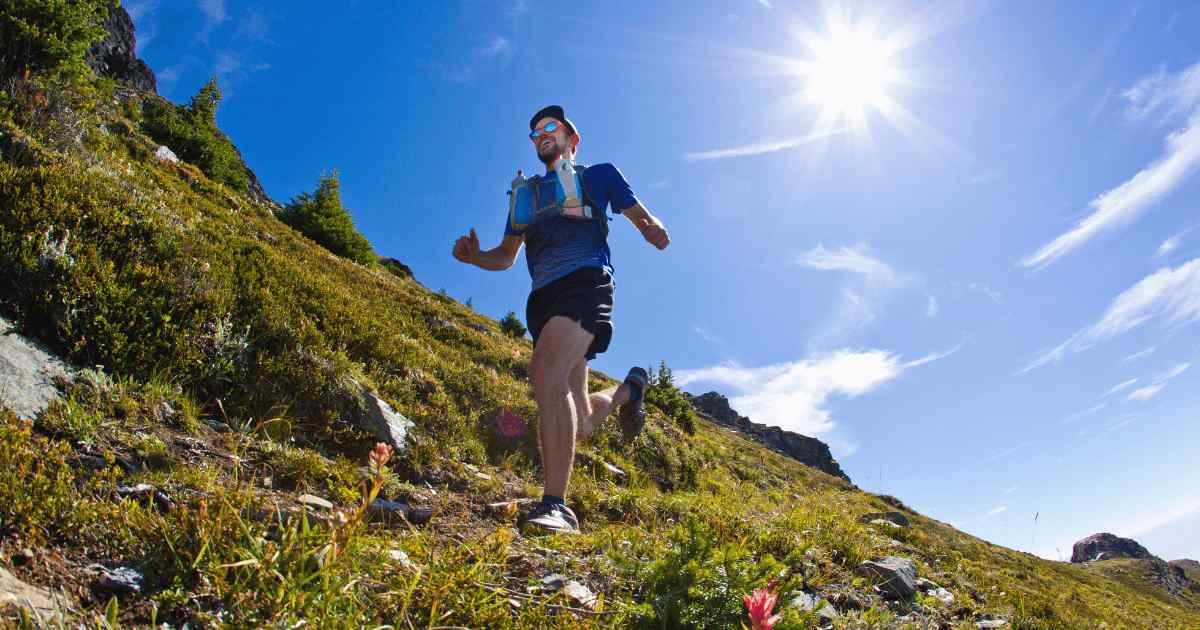
A trail runner is an athlete who moves through diverse natural environments, tackling routes that may include forests, mountains, hills, and mixed terrain, often characterized by unpredictable conditions. This involves a higher level of both physical and mental engagement compared to traditional running.
In particular, the environment in which a trail runner operates presents several distinctive features that significantly influence performance:
- uneven terrain such as rocks, roots, gravel, mud or snow
- continuous elevation changes, both uphill and downhill
- rapidly changing weather and environmental conditions
- the need for navigation and terrain reading.
These elements highlight how trail running is not merely about speed, but rather a complex discipline that requires constant adaptation.
In summary, a trail runner is a multidimensional athlete, capable of combining endurance, technical skills and environmental awareness.

How to become a Trail Runner
Becoming a trail runner is not an immediate achievement, but a process that develops over time through:
- experience
- adaptation
- awareness.
Unlike other disciplines, trail running requires a progressive evolution that involves not only physical preparation but also the ability to read and interpret the natural environment.
There is no single method that works for everyone: each athlete develops their own approach based on their starting level, goals and training context. However, it is possible to identify key stages that support balanced and sustainable progress over time.
To approach this journey effectively, it is helpful to consider some essential steps that allow you to build a solid foundation, reduce the risk of injury and gradually improve running quality.
Transition from road running
For many runners, entering the world of trail running begins with the transition from asphalt to natural trails. This is a delicate phase, during which the body must adapt to completely different stimuli, while the mind learns to manage new variables.
During this initial stage, it is advisable to:
- choose simple, well-marked trails, avoiding overly technical terrain at first
- accept a reduction in average pace without comparing it to road running
- focus more on perceived effort rather than speed.
This approach helps develop initial familiarity with natural terrain, giving the body the time it needs to adapt without unnecessary overload. It is a phase of exploration rather than performance.
Developing technical skills
Once a certain level of confidence has been achieved, it becomes essential to work on trail-specific running technique. Unlike road running, the movement must constantly adapt to the characteristics of the terrain.
In particular, it is useful to:
- improve downhill management, developing control and confidence
- learn how to manage effort effectively during climbs
- train balance, coordination and foot placement accuracy.
This phase represents a crucial step, as it enhances movement efficiency and allows runners to tackle more technical sections with greater safety. Good technique not only improves performance but also reduces the risk of injury.
Targeted physical training
Alongside technical development, it is necessary to build a physical foundation suited to the demands of trail running. Natural routes, often characterized by elevation gain and unstable surfaces, require more comprehensive preparation than running on regular terrain.
In this context, it is important to:
- develop strong aerobic endurance
- strengthen muscles, particularly in the lower body
- work on core stability to improve overall body control.
A structured and balanced training approach allows runners to gradually handle more demanding routes while maintaining good movement quality, even under fatigue.
Progression of difficulty
As experience increases, trail runners can begin to gradually raise the level of difficulty in both training and routes. This phase must be managed carefully, avoiding overly rapid increases.
Progression can be achieved through:
- increasing elevation gain and loss
- exploring more technical and varied terrain
- extending the distance and duration of runs.
Managing this evolution properly is essential to ensure consistent and sustainable improvement. Progress in trail running is not linear; it requires listening to your body and adapting accordingly.
Becoming a trail runner means embarking on a continuous growth journey, where each stage builds the foundation for the next. It is not just about running on trails, but about developing a different way of experiencing running—more aware, adaptive, and connected to the environment.
To approach this fascinating discipline, we recommend following the TRM Method, an innovative training approach developed by certified Trail Running coaches from the TRM Team.
Thanks to its focus on gradual progression, attention to detail, and consistency, this method can transform the journey into an effective and highly rewarding experience—enhancing not only performance but also your relationship with nature and your own body.

Characteristics of a Trail Runner
A trail runner is defined by a set of qualities that go far beyond simple athletic preparation. It is not just about running on trails, but about developing a complex balance between physical abilities, technical skills and mental attitude.
This discipline requires a comprehensive approach, where body and mind work together in synergy to handle variable and often unpredictable environments. To truly understand the profile of a trail runner, it is helpful to analyze the key characteristics that shape this athlete.
Among the most important qualities are:
- physical and mental resilience, essential for handling prolonged effort and challenging environmental conditions
- adaptability, crucial when dealing with constantly changing terrain and unpredictable situations
- body awareness, necessary to control foot placement and movement on unstable surfaces
- effort management, especially important on long routes with elevation gain
- decision-making autonomy, often required in remote or poorly marked environments.
These characteristics do not act independently; rather, they integrate to form an athlete capable of managing complex situations with autonomy and efficiency. A trail runner is not merely someone who executes movement, but an active interpreter of the environment in which they move.
Ultimately, what truly distinguishes a trail runner is the ability to combine these skills within a dynamic natural context, continuously adapting to terrain conditions and route demands.
Differences between Trail Runners and other types of runners
To fully understand the identity of a trail runner, it is useful to compare this figure with other types of runners. This comparison highlights not only technical and physiological differences, but also distinct cultural approaches and training philosophies.
Although all these disciplines share the same foundation—running—they develop in very different contexts, which deeply influence how athletes train, compete and interpret performance.
Below are the main distinctions.
Trail Runner vs Road Runner
The comparison between trail runners and road runners highlights two almost opposite approaches to running, primarily shaped by the environment in which the activity takes place.
The road runner:
- runs on regular and predictable surfaces
- maintains a steady and measurable pace
- optimizes performance in terms of speed.
In contrast, the trail runner:
- deals with variable terrain
- continuously adapts their pace
- prioritizes efficiency and endurance over pure speed.
This distinction reflects two fundamentally different ways of experiencing running: one focused on measurable performance, the other on adaptation and managing complexity.
Trail Runner vs Ultra Runner
The comparison with ultra runners introduces a key variable: distance.
Ultra running is characterized by races that exceed marathon distance, regardless of terrain.
The ultra runner:
- focuses on distances beyond the marathon
- may run on both road and trail
- primarily develops extreme endurance.
The trail runner, on the other hand:
- focuses on the type of terrain
- may tackle even short but highly technical distances
- integrates both technical and environmental components.
It is important to note that these two categories often overlap, especially in long-distance trail races, where technical demands combine with ultra-endurance.
Trail Runner vs Mountain Running Athlete
Mountain running is a closely related discipline, but with some structural differences that influence its approach.
Mountain running typically involves:
- shorter and more defined routes
- a higher level of race standardization
- in many cases, a lower technical component.
The trail runner, instead:
- faces more variable routes
- often tackles longer distances
- encounters more diverse terrain.
This makes trail running generally more heterogeneous than traditional mountain running. As a result, training tends to be broader and more multidisciplinary.
Trail Runner vs Skyrunner
The comparison with skyrunners represents the most advanced and technical level of running in natural environments.
The skyrunner:
- runs at high altitude
- tackles extremely technical routes
- manages exposed sections and extreme conditions.
The trail runner, instead:
- operates across a wide spectrum of difficulty
- does not necessarily run at high altitude
- also includes more accessible routes.
In this sense, skyrunning can be considered a specialization within trail running, aimed at those seeking a higher level of technical and environmental difficulty.
In summary, the trail runner occupies an intermediate yet highly versatile position within the world of running. Their identity is built on the ability to adapt to different contexts, combining endurance, technique, and awareness in a dynamic balance.

Conclusion
The trail runner represents an advanced synthesis of multiple skills that go beyond simple running.
They are athletes capable of adapting, reading the environment, and managing effort in complex conditions.
This discipline is not just a sport, but a complete experience that combines performance, exploration, and connection with nature.
In an increasingly specialized sports landscape, trail running stands out for its versatility and its ability to offer continuous development, both physically and personally.
_ _ _ _ _ _
Do you really want to improve your trail running performance?
Rely on one of our personalized training and nutrition plans, tailored to your goals and your current level of preparation.
Start your journey today with a customized approach and take your running to the next level
_ _ _ _ _ _
Frequently Asked Questions (FAQ)
Who is a trail runner?
A trail runner is an athlete who runs on natural trails such as forests, hills, and mountains.
Unlike traditional running, they deal with uneven terrain, elevation changes, and often unpredictable environmental conditions, requiring adaptability, coordination, and effort management.
What is the difference between trail running and road running?
The main difference lies in the context. Trail running takes place on natural and often technical terrain, where pace varies depending on the conditions.
Road running, on the other hand, occurs on regular and predictable surfaces, allowing for a more constant pace and precise speed control.
Do you need experience to become a trail runner?
No specific experience is required to start, but a gradual approach is strongly recommended.
Beginning with simple routes and progressively increasing difficulty helps develop technique, endurance, and safety while reducing the risk of injury.
Does a trail runner need to be stronger or more enduring?
A trail runner needs both.
Endurance is essential for long distances and elevation gain, while muscular strength—especially in the lower body—and stability are crucial for handling technical terrain and maintaining control.
What is the difference between a trail runner and an ultra runner?
The main distinction lies in the focus. A trail runner is defined by the terrain, while an ultra runner focuses on distance, often beyond the marathon.
However, the two categories can overlap, especially in long trail races.
Is trail running more difficult than road running?
Generally, yes. Trail running requires greater adaptability, balance, and attention due to variable and unpredictable terrain.
This results in higher technical and mental demands compared to running on regular surfaces.
Do all trail runners run in the mountains?
No, trail running is not limited to mountainous environments. It can also take place on hills, in forests, or on less demanding natural trails.
Mountains are just one of the many possible settings for this discipline.
What is a skyrunner compared to a trail runner?
A skyrunner is an athlete who practices a more extreme and technical form of running in natural environments.
Skyrunning races are typically held at high altitude, on steep and exposed terrain. Compared to trail runners, skyrunners operate in more demanding conditions and require advanced technical skills.
_ _ _ _ _ _
#TrailRunner #TrailRunning #TrailRun #OutdoorRunning #MountainRunning #UltraTrail #RunWild #TrailLife #EnduranceSport #TrailExperience
_ _ _ _ _ _
Article update on April 2026


CorsaInNatura, enduracetrail, mountain running, outdoor running, skyrunning, TeamTRM, trail runner, Trail Running Programs, TRM, TRM Coach, TRMNutritionPlan, TRMTrainingPlan, ultra trail runner