


UTMB 2026: 20% of elite runners withdrawn… why?
The Ultra-Trail Mont-Blanc 2026 will remain etched in the history of trail running not for the records broken, but for the slaughter of fallen champions before the start.
The numerous and dramatic withdrawals among UTMB© 2026 elite athletes left an unfilled void on the Chamonix starting line, turning what was supposed to be the most anticipated edition into an unprecedented sporting crisis.
Names of the caliber of Kilian Jornet, Jim Walmsley, and defending champion Ruth Croft announced their forfeit just days before the race, raising the alarm in the international community.
But what caused this wave of defections?
Is it purely a matter of unfortunate injuries, or are more complex factors coming into play, such as a packed calendar, the financial pressure of the HOKA Prize Purse, and the dreaded WADA anti-doping controls?
In this in-depth analysis, we examine in detail the causes behind the absences of the main UTMB elite athletes, exploring the physical, mental, and organizational factors that are changing the face of professional trail running forever.
Enjoy the read!
_ _ _
UTMB© 2026: dozens of elite runners retired… why?
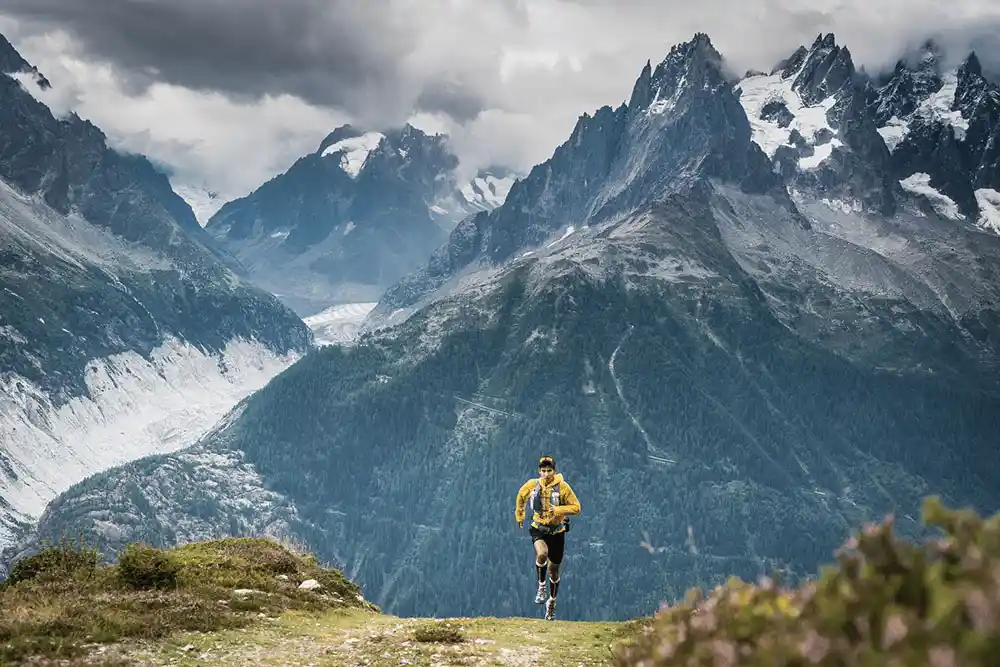
The Ultra-Trail Mont-Blanc 2026 will be remembered for its numerous withdrawals, coming at the last minute or a few days before the start, and even along certain sections of the race.
An edition that was supposed to be epic turned into an unprecedented event in the world of international trail running.
But what happened?
Why so many defections among elite athletes?
It seemed like it would be one of the most important editions ever of the UTMB Circuit, and yet…
Let’s find out together what happened by analyzing every aspect of this extraordinary situation.
Major absentees on the starting line: a slaughter of champions The picture presented on the eve of the start is dramatic for fans.
Never in the history of the Ultra-Trail du Mont-Blanc had such a high number of withdrawals been recorded among the main favorites.
Men
Kilian Jornet, living legend of trail running and multi-time winner of the UTMB, announced his withdrawal on August 20 due to a left knee issue, involving a lateral meniscus injury, cartilage damage, and bone edema. After several months of recovery attempts, the Catalan runner decided to undergo surgery to preserve his long-term career.
A painful but necessary decision for one of the most representative UTMB 2026 elite athletes.
Jim Walmsley, 2023 winner and the athlete with the highest UTMB Index in the field (966), withdrew a few days later, also struggling with knee problems. The American, who holds the race record, had to deal with a persistent injury combined with health issues in the final days before the race. Tom Evans, defending champion, never made it to the starting line.
Meanwhile, Beñat Marmissolle had to withdraw due to a foot injury. The Basque runner, sixth at the UTMB and winner of the Diagonale des Fous in 2022, announced his forfeit on August 22.
Women
Among the female favorites, Sunmaya Budha, already present in Chamonix, withdrew due to the need to continue her recovery from injury. The 24-year-old Nepalese runner, one of the top athletes on the international scene and first woman at the Lavaredo Ultra Trail 2026, represents one of the major absentees.
Ruth Croft, defending champion, decided to stop, stating she no longer had the necessary mental and emotional energy. The New Zealander announced her forfeit 48 hours before the départ for family and personal reasons, leaving a huge void in the women’s field. Croft, who won the UTMB 2025 after completing the OCC–CCC-UTMB triple crown, leaves the competition with the regret of not being able to defend her title. Other world-class names
Added to these are other world-class names such as:
- François D’Haene, four-time UTMB winner with an Index of 858, holder of the race record in 20h11’44”,
- Mathieu Blanchard, with a UTMB Index of 902, third in 2021 and second in 2023, gave up on seeking his first victory in Chamonix
- Katie Schide, winner in 2022 and 2024, holder of the women’s record in 22h09’31”, is forced to skip the race due to a foot injury that has been troubling her for several months
- Camille Bruyas, with an Index of 786, adds to the list of major absentees
A total of 10 Elite athletes withdrew just a few days before the start, creating an unprecedented void in the history of the competition.
Notable race withdrawals: the drama continues
The race started at 7:45 PM on Friday, two hours later than originally scheduled due to the risk of thunderstorms over the Mont Blanc massif.
The real shock came in the hours that followed.
y 7:58 AM on Saturday morning,,,,
21 Top Runners out of 99 had already retired—more than 20% of the Top Elite field.
An alarming figure that testifies to the harshness of the race conditions and perhaps something even deeper.
Almost all withdrawals occurred before Courmayeur at Lac Combal or immediately after at Arnuva, on a non-particularly demanding section of the course.
Among those who retired during the race were major names like Courtney Dauwalter, who had held on until the eve of the race but could not complete it.
Why all these withdrawals? How is it that in a race of this level—where the world’s best specialists arrive with top-tier preparation, technical gear, assistance, and support teams—there is such a high number of defections and withdrawals among UTMB 2026 elite athletes?
Let’s analyze the possible causes:
-
Adverse weather conditions Rain, cold, and difficult terrain certainly played a role. The start was delayed by two hours due to thunderstorm risks, and forecasts indicated highly variable temperatures. However, we can hardly consider weather the decisive cause. Those running at this level know perfectly well how to handle any weather condition at the UTMB. In the past, conditions were even worse, such as in 2023 when weather was extremely difficult, yet the dropout rate among elites was lower.
-
Increasingly packed race calendar and rise in injuries Athletes reach their target race after months of competitions, travel, heavy training loads, and incomplete recoveries. The modern trail running calendar has become extremely dense: UTMB 2026 elite athletes must participate in numerous World Series races to collect the points and Running Stones required for qualification. Are even Elites failing to recover properly? The answer seems to be yes. Kilian Jornet dealt with knee problems for several months before opting for surgery. Jim Walmsley suffered a knee injury combined with health issues. Katie Schide has been suffering from a foot injury for months. The RED-S phenomenon (Relative Energy Deficiency in Sport), which publicly affected Beñat Marmissolle, shows how the pressure to perform at these levels is pushing athletes to their physical and mental limits.
-
New anti-doping controls: another decisive factor? Could WADA’s announcement, just days before the race, of testing across the OCC, CCC, and UTMB have discouraged those using “borderline” substances to recover faster from physical problems? UTMB doubled anti-doping testing for the 2026 edition, extending controls to all categories, not just elites. Tests are conducted in compliance with the World Anti-Doping Code and involve the ITA (International Testing Agency). Please note: there is no evidence linking the UTMB 2026 withdrawals to anti-doping controls, but the ultra trail world is changing. The equation “more prize money, more doping risk” applies to all sports, including trail running.
-
Financial pressure: the HOKA Prize Purse This year, the “HOKA Prize Purse” provided 271,000 euros for UTMB Mont-Blanc. An unprecedented figure that has radically transformed the economics of trail running. The total annual prize purse is distributed to the top 10 male and female finishers of UTMB Mont-Blanc. For the first time, trail running has become a genuinely lucrative sport for top-tier athletes. Could this financial pressure have pushed some athletes to stand at the start line at less than 100% fitness, hoping to hold on long enough to secure a cash placement?
Or conversely, did it lead to greater caution to preserve long-term careers?
The technical context: UTMB Index and qualifications
To fully understand the situation of UTMB 2026 elite athletes, one must consider the qualification system based on the UTMB Index.
This system evaluates trail runner performances based on race results and allows comparison among athletes worldwide.
For example, Jim Walmsley had the highest Index (966), followed by athletes like Mathieu Blanchard (902) and Beñat Marmissolle (903). The pressure to maintain or improve one’s Index can lead athletes to race too frequently, increasing the risk of injury.
The Ultra-Trail Mont-Blanc course: an extreme challenge
The Ultra-Trail du Mont-Blanc covers approximately 174 km with 10,000 meters of positive elevation gain, crossing three countries: France, Italy, and Switzerland.
The route passes through Courmayeur (Italy), Champex-Lac (Switzerland), and back to Chamonix (France).
Technical difficulties are significant: it reaches altitudes of up to 2,500 meters, featuring exposed trails, technical terrain, and rapidly changing weather conditions.
It is no coincidence that many withdrawals happen in Courmayeur, if an athlete isn’t performing well, it happens before the most demanding part of the course.
Reactions from the trail running community The trail running community is certainly reflecting on this 2026 edition.
Never before had such a number of elite athletes been seen withdrawing before or during the race.
Social media and specialized forums are filled with discussions on possible causes.
Some point the finger at an overly dense race calendar, others speak of a system pushing athletes beyond their limits, while some raise questions about anti-doping controls.
The truth likely lies in a combination of all these factors.
What does this edition teach us?
UTMB 2026 should prompt deep reflection across the entire trail running movement:
Calendar sustainability: is it possible to continue racing this much at high levels without paying too high a physical price?
Injury management: athletes like Kilian Jornet choosing surgery demonstrate that sometimes it is necessary to stop to preserve a career.
Financial pressure: with increasingly high prize money, the risk is that athletes push themselves past their physical limits.
Psychoogical Well-being: Ruth Croft declaring she no longer had the necessary mental and emotional energy reminds us that trail running is also a psychological challenge.
The future of trail running
UTMB 2026 marks a turning point for global trail running.
The combination of significant prize money, strengthened anti-doping controls, increasingly dense calendars, and media pressure is radically transforming this sport.
UTMB 2026 elite athletes represent the forefront of this transformation.
Their withdrawals—motivated by accumulated injuries, mental exhaustion, or deliberate choices for long-term health—should serve as a wake-up call for the entire movement.
Conclusions
There is no simple answer to the question “why so many withdrawals at UTMB 2026?”.
It is likely the convergence of multiple factors: accumulated injuries, overly dense calendars, growing financial pressure, harsh weather conditions, and perhaps the impact of enhanced anti-doping controls.
What is certain is that UTMB 2026 will remain in history not for its winners, but for its absentees.
A warning to the entire trail running world: the pursuit of performance cannot and must never compromise the physical and mental health of athletes.
What is your interpretation?
The debate is open, and the community’s opinions will be crucial in guiding the future of this extraordinary sport toward a more sustainable and athlete-respectful direction.
_ _ _ _
Do you want to prepare your UTMB© race plan?
Tackling a race of around 170 km requires much more than simple physical preparation. Pacing, split times, hill and descent management, aid stations, nutrition, hydration, gear changes, and race strategy management must be organized before the start.
The Trail Running Movement Race Plan was created with this exact goal: turning preparation into a concrete, personalized strategy to approach the race with greater awareness.
A structured plan can help:
- define a pacing strategy;
- organize different sections of the course;
- schedule aid station management;
- plan nutrition and hydration;
- anticipate gear changes;
- set intermediate goals;
- prepare alternative strategies in case of difficulties.
The hard work was done in the preceding months. Now it’s time to turn it into a race strategy.
Discover the TRM Race Plan and prepare your strategy to reach the finish line.
_. _ _ _ _
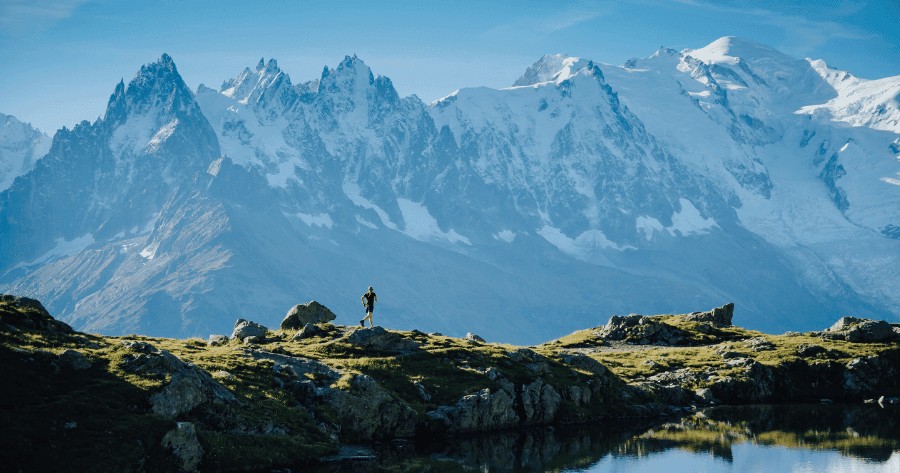
Preparing for UTMB© means preparing your strategy as well Tackling UTMB© and Mont Blanc requires months of training, but preparation doesn’t end with the last long run.
The final three weeks are essential for recovery, progressively tapering the load to arrive at the start line in optimal condition. Gear, nutrition, and aid station management must be planned in advance. Race strategy must also be defined before the start, while leaving room for adaptability.
A 170 km race cannot be managed like a short competition. It requires breaking the course into sections, conserving energy, and making the right decisions even under severe fatigue.
The goal is not just arriving prepared at the start line. It is reaching Champex-Lac and the final kilometers with the ability to still manage your race.
Preparation, strategy, and adaptability are the elements that can turn months of training into a concrete chance of becoming a UTMB© Finisher.
_ _ _ _. _
Frequently Asked Questions
Who are the main elite athletes who withdrew from UTMB 2026 and for what reasons?
Among the most prominent names are Kilian Jornet (lateral meniscus injury, cartilage damage, and bone edema in his left knee), Jim Walmsley (knee issues and illness), Tom Evans (failure to reach the start line), Beñat Marmissolle (foot injury and RED-S management), Katie Schide (persistent foot injury), Ruth Croft (depletion of mental and emotional energy), and Sunmaya Budha (injury recovery).
Why did many race withdrawals happen specifically before Courmayeur or at Arnuva?
This section represents the first true test of the course.
After departing Chamonix, runners immediately face significant elevation gain and technical terrain.
For athletes not at 100% fitness or hiding injuries, this section acts as an immediate “filter,” forcing an early withdrawal to prevent worse damage.
Are adverse weather conditions the main cause of elite withdrawals?
No. Although the start was delayed by two hours due to thunderstorm risks and the course saw rain and cold, elite athletes are professionals accustomed to managing extreme conditions.
In the past, UTMB has experienced even worse weather with lower dropout rates among top runners. Weather is a contributing factor, but not the decisive cause.
What is the link between a dense race calendar and the rise in injuries among elite athletes?
The modern trail running calendar requires athletes to compete in numerous World Series races to collect “Running Stones” and maintain their high UTMB Index.
This leads to months of continuous competition, travel, and high training loads, drastically cutting recovery times and raising the risk of overuse injuries and conditions like RED-S (Relative Energy Deficiency in Sport).
Did WADA’s new anti-doping controls influence defections at UTMB 2026?
There is no direct evidence linking the withdrawals to the control announcements. However, UTMB doubled anti-doping testing for the 2026 edition, expanding it across all categories.
In sports, the equation “higher prize money, increased doping risk” applies; the announcement of strict controls may have psychologically or strategically impacted anyone relying on “borderline” substances to speed up physical recovery.
How much is the UTMB 2026 prize pool and how does it affect athlete pressure?
The “HOKA Prize Purse” for UTMB Mont-Blanc 2026 offers 271,000 euros. This amount, combined with a total annual World Series prize purse of around 271,000 euros, has transformed trail running into a lucrative professional sport.
Such financial pressure can push some athletes to start without being 100% fit, hoping to hold on for a payout, or conversely, to withdraw early to preserve long-term careers and future earnings.
What is the UTMB Index and how does it contribute to athlete pressure?
The UTMB Index is a statistical performance rating system developed by the organization to measure a trail runner’s level based on race results.
A high Index (like Jim Walmsley’s 966 or Mathieu Blanchard’s 902) is essential for qualification and elite status. The constant pressure to maintain or boost it forces athletes to race frequently, limiting rest.
Is mental well being becoming a decisive factor in professional trail running withdrawals?
Yes. Defending champion Ruth Croft’s statement about lacking the necessary “mental and emotional energy” 48 hours before the start highlights how the psychological toll of extreme preparation, combined with expectations and personal sacrifices, has become as valid and respected a reason to withdraw as a physical injury.
What are the prospects for Kilian Jornet’s return after his withdrawal?
Kilian Jornet opted for left knee surgery after months of attempting conservative recovery. The decision, as he communicated, was made with a “long-term vision.”
Although he misses UTMB 2026, the surgery aims to repair the lateral meniscus injury and cartilage damage to allow him to return to top-level competition in the future.
What does the 2026 UTMB edition teach us about the future of trail running?
The wave of elite withdrawals at UTMB 2026 serves as a wake-up call for the entire movement.
It demonstrates that the current model—driven by packed calendars, high financial pressure, and constant performance expectations—may not be sustainable.
The future of trail running will necessarily need to strike a better balance between professionalization, prize purses, and protecting athletes’ physical and mental health.
_ _ _ _ _
#UTMB2026 #TrailRunningNews #UTMB #UTMBMontBlanc #Elite #UltraTrail #UltraTrailRunning #TrailRunning #TrailRunner #UltraRunning #TrailRunningCoach #MontBlanc #UTMBPreparation #UTMBTraining #UTMBRacePlan #TrailRunningMovement #TRM #UltraTrailTraining #TrailRunningCommunity #100Miles #Chamonix #EnduranceRunning #TrailRunningTips
_ _ _ _ _
Article updated 2026

best utmb athletes, ccc, courmayeur trail running races, elite runner utmb, trail runner, trail running news, Ultra Trail du Mont Blanc, UTMB, utmb champions, utmb elite athlete