


Running on mud and snow: how to adapt your technique and pace on unstable ground
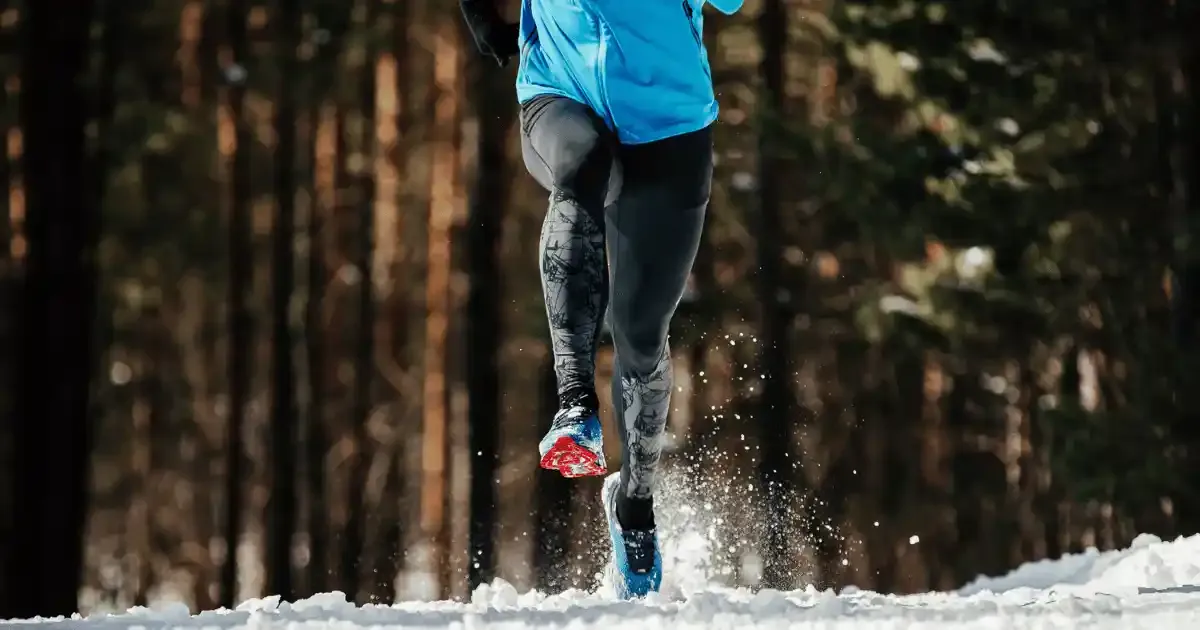
Anyone who practices trail running in winter knows it well: running on mud, snow, ice, and soft ground completely changes the experience.
Trails that feel smooth and runnable in summer become demanding, every foot strike requires attention, and managing effort and motivation becomes more complex. In these conditions, trying to run “as usual” is not only ineffective, but often counterproductive.
On unstable terrain, the priority is not speed, but staying efficient and safe, saving energy and reducing the risk of slips or injuries.
Adapting technique and pace does not mean giving up performance; rather, it means developing essential skills for a trail runner, especially during the winter months.
Let’s take a look at the practical rules for running on snow and mud in a more conscious and effective way.
_ _ _ _ _ _
_ _ _ _ _ _
Unstable Ground: What Really Changes When You Run
Before diving into specific technical advice, it’s important to understand what changes biomechanically when the terrain becomes unstable:
-
mud and snow reduce the elastic return of the ground, increase uncertainty in foot placement, and require constant neuromuscular control
-
every step becomes more “costly” in terms of energy, and the body has to work harder to maintain balance and direction.
This explains why, at the same perceived effort, pace tends to slow down and why forcing speed often leads to slips, stiffness, and early fatigue.
In this context, the goal is to adapt the running stride to make it more stable and fluid, even if that means letting go of familiar reference points.

Tips for Running on Mud and Snow in Trail Running
Running on mud and snow means dealing with constantly changing ground that offers less stability and demands greater attention and control than dry trails.
In these conditions, running mechanics must adapt: what works on firm ground can become ineffective—or even risky—when traction decreases.
The goal is not to “force” the run to maintain usual speed or sensations, but to modify key elements of technique to remain efficient and safe.
Small adjustments to stride length, posture, foot placement, and downhill approach help reduce the risk of slipping, save energy, and maintain a smoother running style even on unstable terrain.
Below are the main adaptations to adopt when the ground becomes muddy or snowy—and why they represent fundamental skills for trail runners, especially in winter.
Shorten Your Stride to Increase Control
The first essential adjustment concerns stride length. On mud and snow, seeking the long stride typical of firm ground increases the risk of losing traction and makes foot placement harder to control.
On unstable terrain, running becomes less “reactive” and more “controlled,” so shortening the stride is a natural response.
The benefits of shorter strides include:
-
increased cadence
-
reduced critical ground contact time.
At first, this may feel more tiring or less fluid. In reality, over time, this approach improves balance, reduces slips, and helps maintain a steadier effort.
Lower Your Center of Gravity and Refine Posture
Posture plays a decisive role when terrain becomes unstable. The more slippery or soft the ground, the more the body needs stability and adaptability.
This doesn’t mean adopting a rigid position, but finding a dynamic, responsive stance. The optimal posture for running on mud or snow in trail running involves:
-
a slight forward lean of the torso
-
soft knees ready to absorb impact
-
an active core acting as a stabilizer
-
general relaxation, avoiding stiffness.
A lower, more controlled posture helps keep the center of gravity stable and allows quick reactions to terrain changes.
Here, the importance of strength training and core stability becomes clear: the better these components are trained, the easier it will be to maintain control and fluidity in difficult conditions.

Don’t Use Pace as Your Main Reference
One of the hardest things to accept—especially for runners used to constantly monitoring data—is that pace per kilometer loses meaning on mud and snow.
Chasing a number on the screen can lead to unnecessary forcing and increase the risk of mistakes. The real objective is not to run “fast,” but to manage effort intelligently, using:
-
perceived effort (RPE)
-
breathing control.
With this shift in perspective, it becomes easier to accept that, at the same effort level, pace may be 30–60 seconds per kilometer slower—or even more.
This is a normal physiological response, not a sign of poor fitness. Learning to run “by feel” is a valuable skill for any trail runner.
Foot Placement and Traction: Learn to Read the Terrain
Running on unstable ground requires constant terrain reading. Not all foot placements offer the same grip, and identifying more solid spots can make a big difference in safety and efficiency.
This skill develops through experience and awareness, not brute force. Often, the most stable surfaces include:
-
exposed roots
-
solid rocks
-
compact grass
-
the edges of the trail.
Using these as reference points helps improve traction and reduce slipping. Conversely, pushing aggressively on unstable surfaces often results in lost grip and wasted energy.
Downhill Running: Control Before Speed
Downhills are undoubtedly the most delicate phase when the ground is slippery. This is where the temptation to let speed take over can become dangerous, especially with mud or compact snow.
The most effective strategies for downhill running on mud and snow include:
-
further shortening the stride
-
maintaining quick, light foot contacts
-
avoiding leaning backward
-
not using the heels to “brake.”
With these strategies, downhill running becomes more controlled and less stressful for muscles and joints. The focus should be on managing the center of gravity and maintaining continuity of movement—not maximum speed.

Training These Skills: More Than Just Technique
Adapting to running on mud or snow doesn’t depend only on what you do on the trail, but also on how you prepare your body to handle instability.
Technique is essential, but without an adequate physical base it becomes difficult to apply effectively, especially when fatigue sets in.
The ability to maintain balance, control, and reactivity on unstable ground results from training multiple components:
-
general strength, which improves foot placement management and impact absorption on uneven terrain
-
core stability, which helps keep the center of gravity under control, reducing compensations and improving fluidity
-
proprioception, which trains the nervous system to react quickly to terrain changes, making adjustments more automatic.
Training these skills also means accepting mistakes as part of the process. Minor slips, brief losses of balance, and quick recoveries are all part of learning.
Conclusion
Running on mud and snow doesn’t simply mean running slower—it means running differently, with greater awareness and technical control.
Accepting a change in pace, adapting stride length, and refining posture help save energy, reduce risks, and improve as a trail runner.
Winter, with its challenging conditions, becomes a true natural training ground: learning to manage unstable terrain today means being more prepared and complete when the trails dry out again.
_ _ _ _ _
Want to improve your technique on mud and snow?
Stay up to date by reading the Trail Running Movement Blog
or subscribe to our newsletter TRM News for training and nutrition tips.
_ _ _ _ _ _
Frequently Asked Questions (FAQ)
1. Does running on mud and snow really improve running technique?
Yes, if approached with awareness. Unstable terrain forces you to improve balance, control, and center-of-gravity management—skills that are also useful on faster, more runnable terrain.
2. Is it normal to run much slower on mud and snow?
Absolutely. At the same level of effort, pace can slow by 30–60 seconds per kilometer or more. This is a normal physiological response due to the higher energy cost.
3. Is it better to avoid downhills when the ground is very slippery?
Not necessarily, but they must be tackled with greater control. Reducing speed, shortening the stride, and keeping the center of gravity stable helps lower the risk.
4. Do you need a specific type of shoe to run on mud and snow?
Shoes with good traction can help, but technique remains the main factor. Even the best outsole cannot compensate for poor posture or poorly managed foot strikes.
5. Are these skills trained only in winter?
No, but winter is the ideal time to develop them. Strength, stability, and control training is useful year-round and improves running quality in every season.
_ _ _ _ _
#TrailRunning #TrailRunner #WinterTrailRunning #RunningOnMud #RunningOnSnow #MountainRunning #RunningTechnique #TrailTraining #WinterTraining #TrainingInWinter #RunningInWinter #TrailRunningItaly #RunningItaly #WinterPreparation #GeneralStrength #CoreTraining #TRM #TRMCoach #TrailRunningMovement



mountain running, prepare for a trail run in the snow, running on snow, trail runner life, Trail Running Movements, trail running on snow, trail running winter training, TrailRunners, training on snow, TRM, TRM Coach, winter training